We finally got round to rehearsing act 2 of Mojo, we blocked it all and we’ve changed the ending of the scene adding our own little twist.
Mickey hides the fact that he was trying to get through to Mr Ross, why does he do this the audience should question and ponder upon. I need to make it very clear with the phone and my response to Sweets and Potts entering that Mickey has in fact got something to hide.
Potts is angry with Mickey after he slaps him, he could be seen as the one in charge after Ezra, Mickey and Baby. Mickey does apologies and the scene continues.
Skinny arrives back with a small gun, the rest of the group isn’t impressed, however they still have the cutlass.
Potts questions the relationship between Mickey and Skinny, he even asks Sweets, “Did I fall asleep and miss the wedding,” after Mickey actually goes upstairs with Skinny to talk to him in private.
Baby tests Mickey, he knows something is up but everyone thinks he’s just mentally unstable; that is a trait I like about Baby, he’s always been a rule breaker thanks to his disturbing past but he’s not stupid, he knows something is very wrong and is the only one to question Mickey’s actions.
Once again Baby threatens Skinny leading to Mickey chucking him out the club nit till after Baby threatens to kill him too, Mickey however does not flinch.
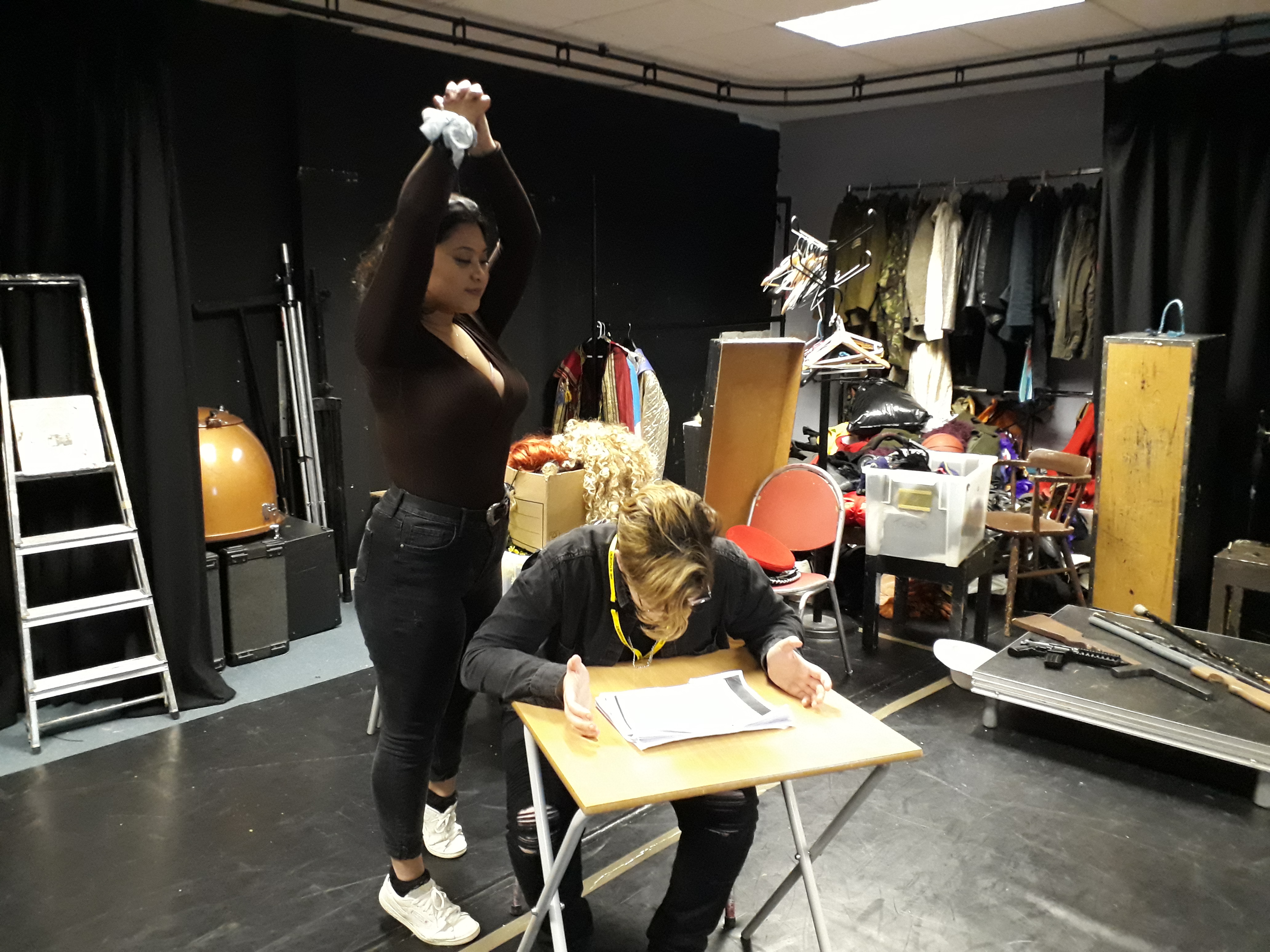
At the end of the scene Potts tries to kill Mickey but he chickens out right at the last second while Mickey is resting with a cloth over his face.
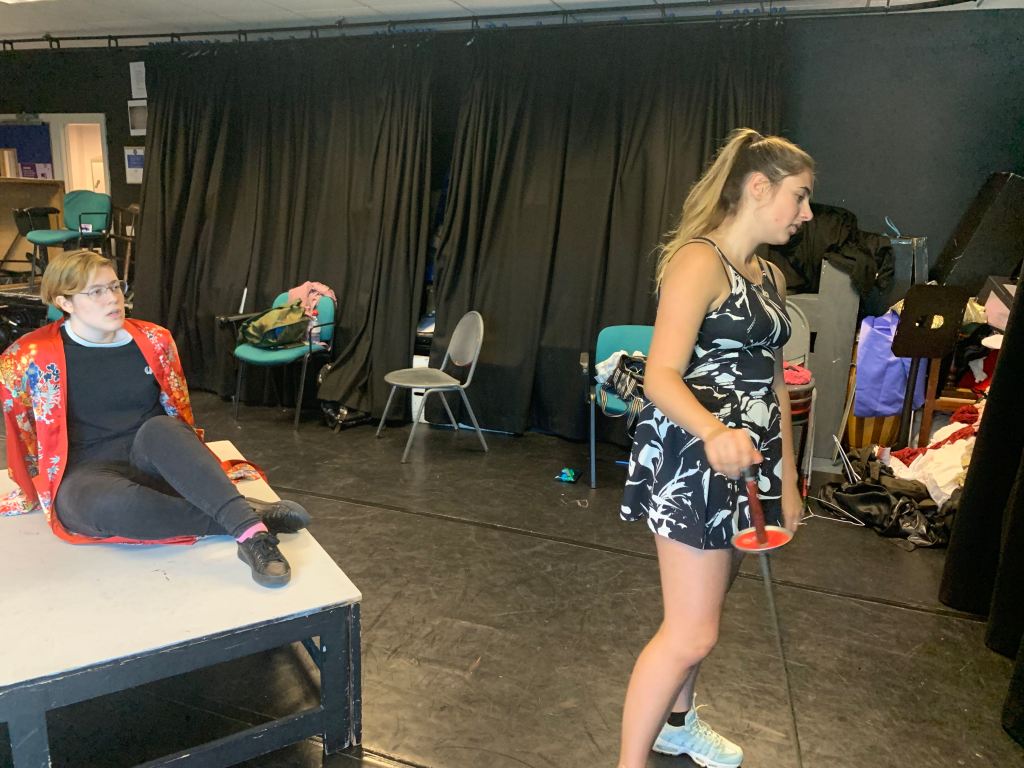
Kirsten as Potts trying to build up the courage to shoot Mickey (Me)We tried it both with the gun and cutlass, I prefer the gun myself.
We decided to do this to show that Potts is more then just another gangster who takes pills, drinks, chats up the girls and wears stylish clothes. He would be the one in charge if it wasn’t for Mickey or Baby. He wants to be top dog!
“We’re finished,” my line and I have to push Kirsten who plays Potts onto the sofa to show power and authority over the group showing the audience that Mickey is in fact in charge and doesn’t take anything from anyone.
“Mickey looks like he wants to dance,” Izzy M’s line, I need to get up before she says this line.
When Potts and Sweets are talking off to the side I walk up behind them.
“Mickey,” Potts line, shout “Shut up,” over him, roar it.
“Sam, Sam Ross, that’s his name,” Sweets line, I back of grumbling under my breath in announce.
Showing the relationship between Mickey and Skinny when Baby knocks Skinny to the ground and Mickey helps him up.
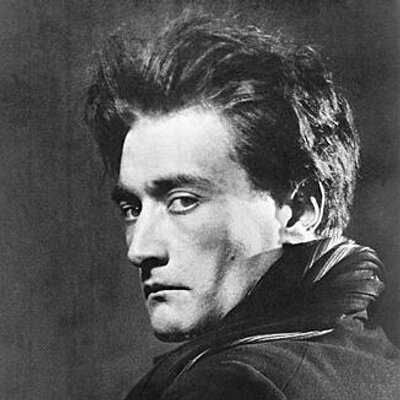
Artaud (1896-1948) is well known throughout theatre for his work on, “Theatre and its Double.” He was a French dramatist, poet, essayist, actor, and theatre director, who to this day remains to be one of the most influential theorists of our time. His aim was to disrupt the relationship between performer and audience using philosophy, discipline and surrealism. His work was meant to wake the audience up, provoke a reaction, one that got the heart pumping and the nerves buzzing.
What makes his work so different from others however is the fact that he confronts the audience with verbal sounds and actions instead of speaking, ones that connect to emotions and go beyond the boundaries of human nature.
Artaud hated how scripts and text restricted the actor from doing certain things and wanted a truly liberated theatre that was not held back by them. He wanted it to come from the soul!
He used elements of surrealism, so no characters the audience could bond to, language to be gestural and non verbal, patterns of sound could become traditional speech replacing it entirely.
‘The Theatre of Cruelty unravels conflicts, liberates powers, releases potential and if these and the powers are dark, this is not the fault of the plague or theatre, but life.’
Antonin Artaud
My class performed a ritual, only using verbal sounds and actions around a chocolate bar when we first started Artuad’s work; we were all very confused but had a laugh when we finally realized what our teacher Nat was doing. We took our shoes and socks off making it feel more tribal as we all came to circle, the chocolate bar hanging from the ceiling in the middle. We did this for about 5 minutes, getting louder in some moments before switching to a whisper, the only word we kept repeating was chocolate because that was what it was all about, nothing else mattered. We then came to a stand still and Natalie brought the chocolate bar down to us and opened it; Awo in the background was banging a drum as the rest of us carried on saying chocolate before we all hummed in satisfaction when receiving a piece of the chocolate, this carried on until it was all gone.
Once finishing the ritual, we went on to a game that was based round the senses only. In groups we were blind folded and were given different objects and foods to touch, the rest writing down our responses being we didn’t know what we were touching. There was loads of different reactions, mine wasn’t very interesting but some of the group screamed and squirmed mainly over the kidney beans which was very funny. Its very fascinating how we all reacted differently.
We also did another exercise where using physical movement expressed an emotion with our bodies and not just our facial expressions. The three emotions my group used was sensual, frightened and quiver.
Sensual, frightened and quiver. Sensory. We then performed it in direct opposition. Frightened with the movement for sensual, quiver with the movement for frightened and sensual with the movement for quiver. Physicalising senses.
Robot Wars, a game where one person controls another, language being gestural and non verbal.
Why did they have to film my worst one! I tied in my first go! I didn’t even know they used my friends as obstacles either!
Summary
Artaud’s dramatic intention was for a sensory experience, be anti-realist have the performance itself to be visually striking and contain as much violence as possible in order to get a disturbed response out of his audience but also moved.
It was to be a surrealist drama with vivid detail, unsettling scenery, characters and imagery. The actors had to be physically fit but also athletic, have strong powerful voices and be willing to go beyond what is required of an actor.
Puppets and masks make the whole scenario creepier because you cannot see the actor’s face as well as breaking the relationship between the actor and audience. Overall making it a surreal experience.
The audience should remain in the middle of the action at all times and go away thinking differently about the subject the play is about. They should also be catharsis which means feel good because they’ve released a repressed emotion when watching Artaud’s work, they should feel relief.
My answer to this question is yes indeed it can and for the better! Throughout history theatre has always been censored until recently because writers and directors work wasn’t something critics and their audiences wanted to watch, it wasn’t entertaining just a piece of work that touched upon a certain subject most people ignore in their everyday lives. That was where is was wrong, no one cared about anything outside their own lives and it’s been a theatre’s job to set out to make a difference for many years and in those years so much has changed thanks to the help of theatre!
Augusto Boal’s techniques are one of the best ways to make the audience go away thinking differently about a certain subject or making them go so far as to something in their everyday lives even if it’s as simple as recycling more efficiently, it’s making a change to the world by saving the environment. Forum theatre is the main one, where the audience can throughout anytime in the play stop it and change how the character responds and acts to the situation they are in.
A company who’s inspiration was Augusto Boal; they set out to make us as humans understand the worlds around us, the ones we live in as well as making a change in society as well as politically. They had a close relationship with Boal when the man was alive. Adrian Jackson, founder-director of Cardboard Citizens cooperated with Augusto when he came to the UK and even translated many of his books into English. Their work expanded across the world.
They make life changing theatre on stage, in the streets, in hostels and even in prison, their main focus being on homelessness. Many of the people they work with are or once were homeless themselves and they tell their stories through the company.
They have a range of workshops exploring Augusto Boal’s work as well as training that builds up self-confidence, many useful skills and brings a community of people together. People come from all over the world to Cardboard Citizens while Cardboard Citizens has reached out to them as well.
TEDx Talk with Selina Busby
Selina Busby has been involved with theatre for over 22
years, directing it, teaching it and performing it with many diverse people
ranging from elders with dementia, men in prison, been in countries like Costa
Rica in the rain forests with indigenous communities, youth theatres in London,
Homeless shelter in New York, gone to India to teach students and teachers on
the streets and so much more!
She is also dyslexic meaning no one believed when she grew up
this would be what she ended up doing but she proved everyone wrong, theatre is
a job as well as a passion! It is not easy however, she describes her job like
being a nurse who has been asked to cure the plague with one tiny plaster. Of
course she doesn’t regret any bit of it, she knows what she’s going, theatre
can change the world, and it teaches people about all sorts of problems while
also being fun and entertaining. It solves problems like global warming,
poverty, homelessness, gets people to understand different communities like
LGBT if they didn’t get them before. It gives people jobs, careers, enjoyment
and a place of comfort.
Selina uses a slinky as an example of a cage, that cage is
the box we humans live in, it’s our world that we do not wish to come out of
but theatre are the gaps between the slinky which allows us to break through
and go beyond what is expected of us as human beings.
Theatre brings families together, Selina goes on to talking
about how men in prison who have families waiting for them on the outside can
damage their relationships with the people within their family especially if
they have young children. She has gone into those prisons, brought these men
with children together and made them practise and rehearse a piece of children’s
theatre to show off to their children who are invited to come and watch. This
project also gets those fathers to reflect on their lives in prison as well as anticipating
what is going to happen in the future, some go on to saying they will remain
crime free and be there for their children once released. Now that is life changing!
The Children’s play project gives these men an opportunity to prove that they
want to change and actively participate in their children’s lives.
It also gives these men a chance to prove to their wives, husbands their partner that they are not just wasting away in prison doing their time but are activity setting out to change their lives for the greater good!
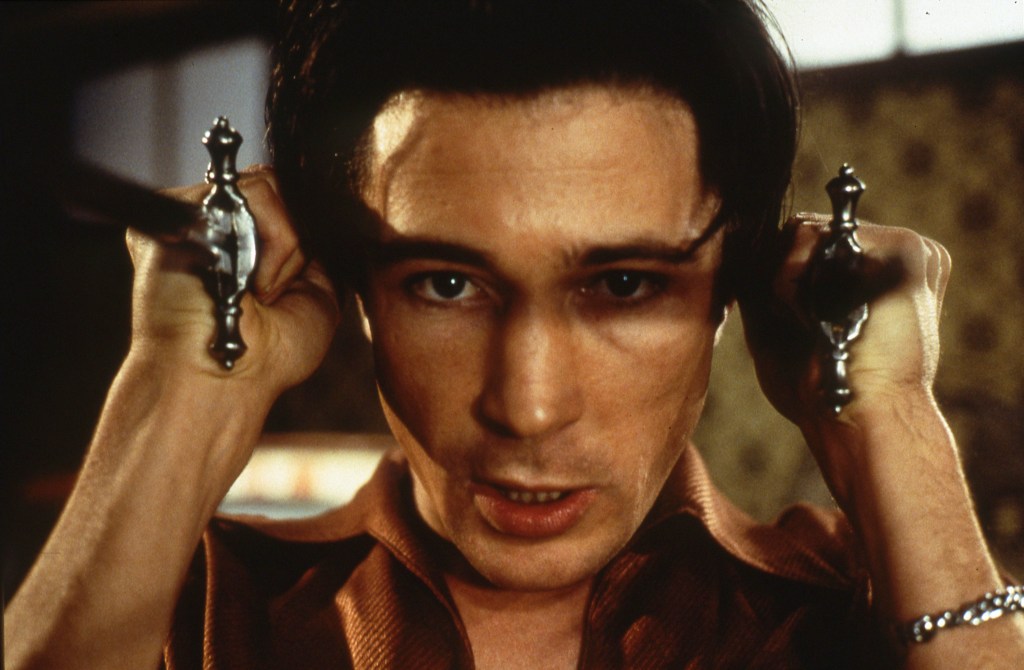
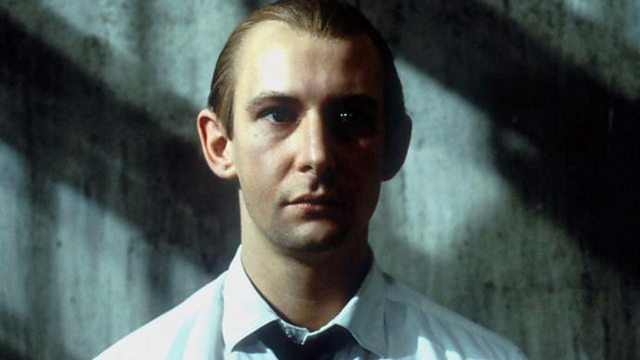
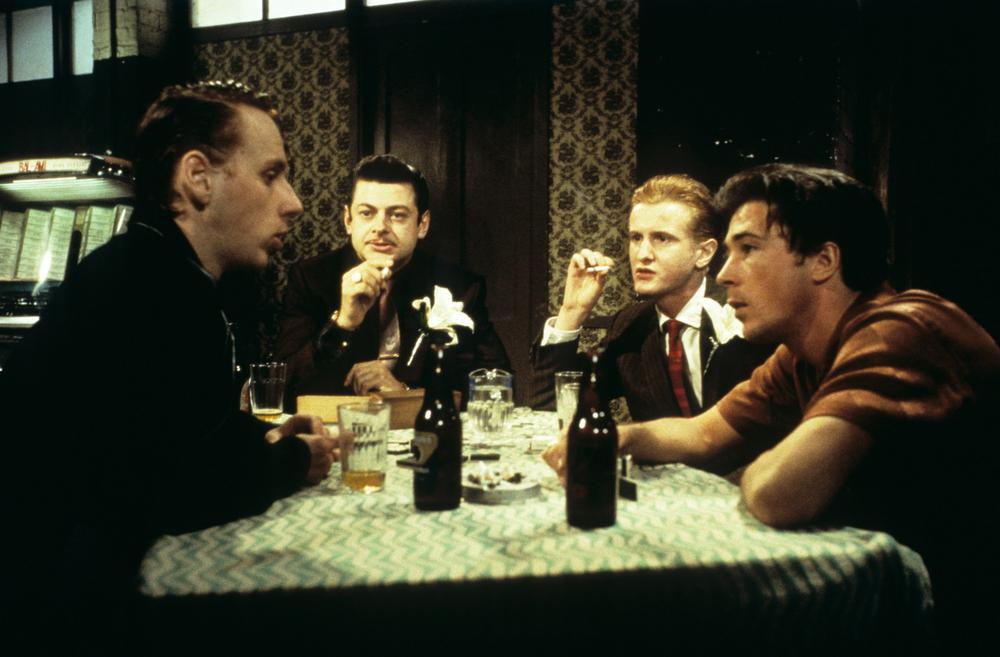
I’m basing Mickey off the movie’s version of him, Ian Hart’s version. I love how he plays the traitor of the group and makes him such a likable character all round even in the end.
In the play Mickey first appears in Scene Two and is immediately shown to be the one in charge because while Baby is tormenting Skinny, Sweets and Potts try to stop him the moment they realise Mickey is in the room. Baby on the other hand couldn’t careless and talks to the man like nothing it wrong.
I walk in from the back, stand there for a second before going to grab myself a drink at the bar that we have placed at the back of the stage before heading over to Ezra’s desk.
Mickey grabs a drink when first entering, taking it to Ezra’s desk and sitting there being he’s second in command.
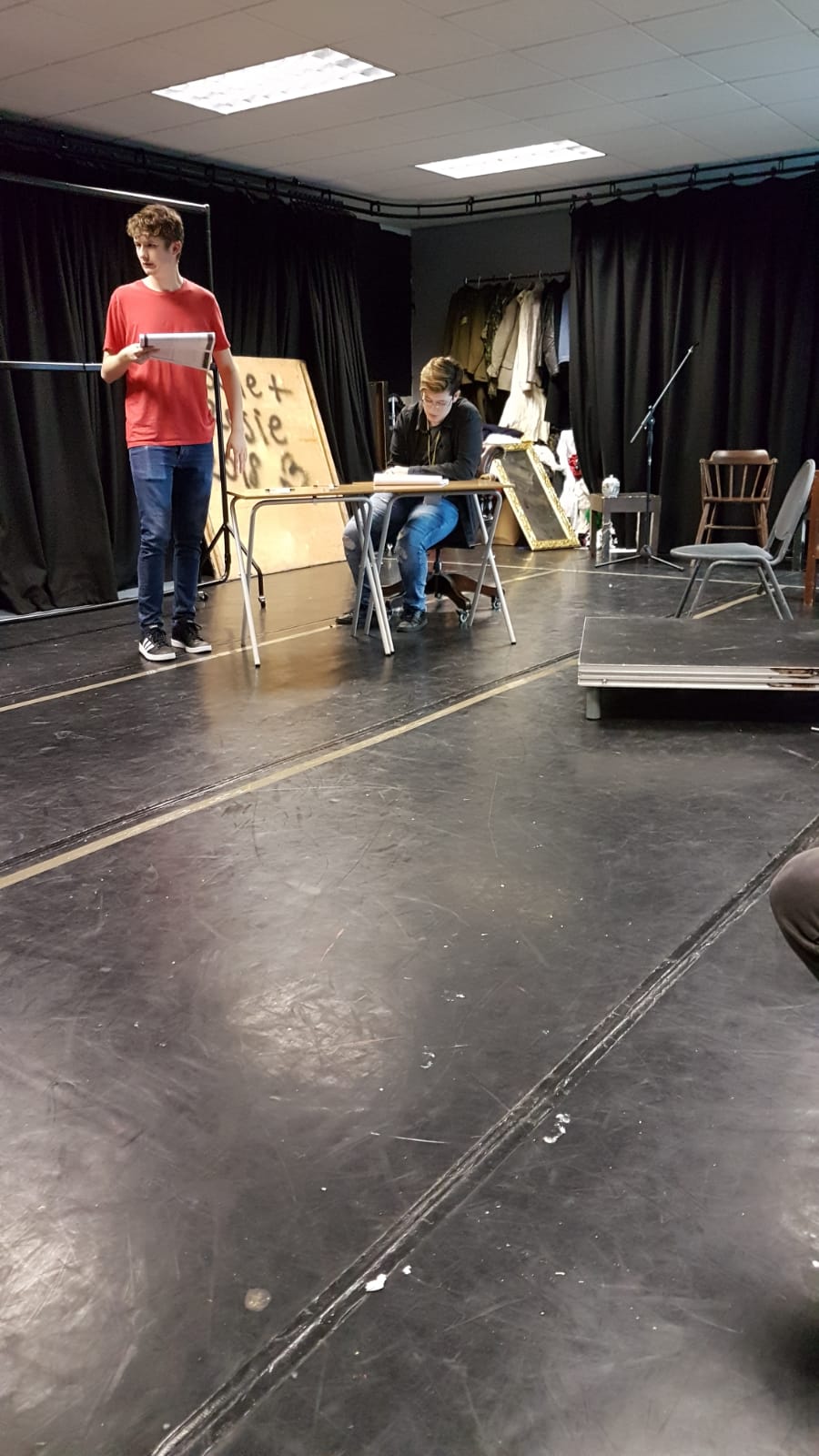
I sit down and remain there for a minute as Kirsten, Awo and Dan crowed round me, clueless to the situation at hand, nattering on about pointless things until Baby goes to leave finally causing Mickey to speak again.
Me as Mickey getting frustrated with the rest of the group.
Baby knows how to push Mickey’s buttons proceeding to do so before leaving the club, where in a burst of anger Mickey reveals the news about Ezra’s demises to the rest of the group.
Mickey sitting down after breaking announcing Ezra’s death.
They all start to freak out while Mickey tries to keep them calm and under control.
Mickey keeping everyone in the room under his control.
He asks them all questions about the night before being he wasn’t there and isn’t happy with the answers he’s given. In our version we have decided that Mickey can be quite frightening at times by just slamming a cabinet door or talking right behind the boys making them tense up, not knowing what he’s going to do next. Its a tough guy act that Mickey pulls off very well and I need to make that known in future rehearsals. Potts and Sweets knew Mr Ross was there having a meeting with Ezra over Silver Johnny but Potts tried to keep that on the down low; Sweets ruins his chance and in the heat of the moment Mickey slaps Potts.
Taking in feedback.
Sidney (Potts) grows angry with Mickey for the rest of the scene. He makes it known that he doesn’t work for Mickey he works for Ezra, who’s now dead, he was high off his face off pills, it was busy and can’t be blamed for something he couldn’t control.
Baby re-enters holding toffee apples and hands one to each of the group as an apology for his behaviour earlier on. The group grow cold, nervous not wanting to tell Baby about his father, Mickey does so anyway and that’s where we finished up for the day.
Traditionally spoken by working class Londoners especially from the East End.
Here are some tips I am using to get into the accent:
Drop the letter “t” and “k” from the middle of words.
“Scottish” becomes “sco’ish”
“Blackboard” becomes “bla’board”
Drop the “h” from the beginning of words:
“Hopefully” becomes “Opefully”
Don’t pronounce the “r” at the end of words:
“Mother” becomes “mothah”
“Car” becomes “Cah”
I’m going to start off with those and build up on it over the next few weeks and I’m watching YouTube videos so I can hear the accent for myself and I’ve found a very helpful one by Jason Statham.
Augusto Boal, who in my opinion was an extremely clever man, created “Theatre of the Oppressed” as a means to provoke social and political change with techniques that bond the audience to the performer. It gets them thinking about oppressive behaviour and how it affects the world around us. They become more then onlookers, the techniques get them involved, make them explore and change the reality in which they are living. He first found it in the 1970s in Brazil his home country and got his inspiration from educator and theorist Paulo Freire, Brecht and Stanaislavski. His work soon spread round the world.
“Theatre is a form of knowledge; it should and can also be a means of transforming society. Theatre can help us build our future, rather than just waiting for it”
Augusto Boal, Games for Actor’s and Non-Actors 1992
The quote above I believe in 100%, theatre can provide people with life changing skills, entertainment and make the world as a whole a better place. It can help create a place of comfort for some people, while others go for the adrenaline rush when seeing actors perform on stage, I’m one of those people. Theatre is used in all kinds of jobs even in ones that don’t necessarily involve being active every single day. An office job for example as team building exercises they’d use acting to create a scene of some sort and many other games used by theatres. Augusto Boal was known for getting those kinds of people involved in his workshops, actors and non actors.
Image Theatre
Still images are what Image Theatre is all about. The participants work together or individually to mold their bodies into a form that shows emotions that tie in with a certain type of situation, perhaps falling in love or the anger of getting dumped. This is all done without speaking, they are like statues. The images are then brought to life once again going back to oppression internal or external, subconscious thoughts and feelings.
My class was put into groups and we had to create these images going from a real image, one people could relate to or understand to an ideal image that satisfies the mind, what we as humans believe is right.
We did mental health, one of us sitting away in the corner their back to the group of us having a good time, their head in their hands. That was our realistic image before creating our ideal one in which the group go to the broken person and crowd round them giving them comfort and support.
Finally we did it frame by frame, going from realistic to ideal by adding in another still image in between the two which showed the group noticing the suffering friend.
It is a very simple drama game for people who are confident in acting and for those who are not or have no experience whatsoever.
Invisible Theatre
As in its title, Invisible Theatre is one that does not wish to be seen or known as a piece of theatre but a scene that people believe is real and have no idea that they are in fact an audience witnessing a piece being put on by actors in a public place. The actors goal is to make it as realistic as possible to provoke a response from the observers. Would they get involved or just proceed to watch or ignore it outright?
The piece needs to be loud enough so its heard and noticed by people but not so over dramatic that it could looked staged. Bystanders will get involved because to them it is real life and that’s what makes Invisible theatre so unique, it achieves what other theatre cannot. It removes all barriers between the actor and spectator, getting them involved in a situation that they would otherwise go out of their way to probably avoid.
My teacher and a second year in my college acted out a scene in front of my class as we worked in groups, about how our dance teacher threatened to quit after being mistreated by the second years in her lesson; my class being it was happening right in front of us couldn’t help but listen in. The second year came to apologise for her class’s terrible behaviour and Natalie our teacher announced how it shouldn’t be her coming to apologise but the people who stepped out of line. My class was horrified at the thought of our dance teacher leaving being she was such a good teacher and as a response we were going to get to the bottom of the situation and find out who exactly hurt our teacher’s feelings. When they split the beans about the whole situation we were very put off and couldn’t get over the fact that they had just done that. That was the first time we got introduced to Invisible Theatre and Natalie got her response out of us.
Forum Theatre
A play or scene showing some sort of oppression on the main character. It is performed twice by the actors; the first time performing the whole story and the second time the audience (spec-actors) are allowed to shout stop anytime and change how the main character deals with the situation by becoming them while the rest of the cast have to mould themselves around the new main character but always try to oppress them. The main character as a result as to try and come up with a solution to said problems.
In groups we had to come up with a short story about a main character being oppressed. In my group we came up with the idea of a anxious girl starting her first day of school (secondary school.)
Scene 1:
Mum and dad talking about girl in kitchen while she’s eating her breakfast at the table. They hope for her to make new friends this only makes the girl feel worse, now she feels pressured by her own parents.
Scene 2:
Girl in class, another student offers her help, she refuses.
Scene 3:
It’s lunchtime and the girl goes to buy food, gets picked on by some bullies and takes her money. The bulling carries on.
Scene 4:
Parents drop girl off at school however once they’re gone she turns round and leaves not wanting to go back there.
Scene 5:
The head teacher’s office, parents and girl are there with the head talking about her absence, why hasn’t she been in for the past week. The girl completely shuts down.
Games for Actors and Non Actors
Columbian Hypnosis: a game that involves a group of people where someone uses their hand to control another person’s every move. If in a bigger group each person is leading another person with their hand while also having to focus on the hand controlling them.
My group tried it, in pairs, then threes and finally all together which was so strange because it literately felt like I was hypnotized by Sue’s hand as it was my only focus.
Tunnel of eyes: someone walks down a hall of bodies, making eye contact with everyone. We tried it like that before changing it up a bit and making the walls tighter to get through making the person walking through more claustrophobic and we also tried it where the person walking didn’t look at anyone. The first time round they didn’t faze me because me as myself don’t care what other people think about me, but when I had to slide through the tight gap the second time I didn’t like it because it reminded me of being on a busy underground train having no room to move.
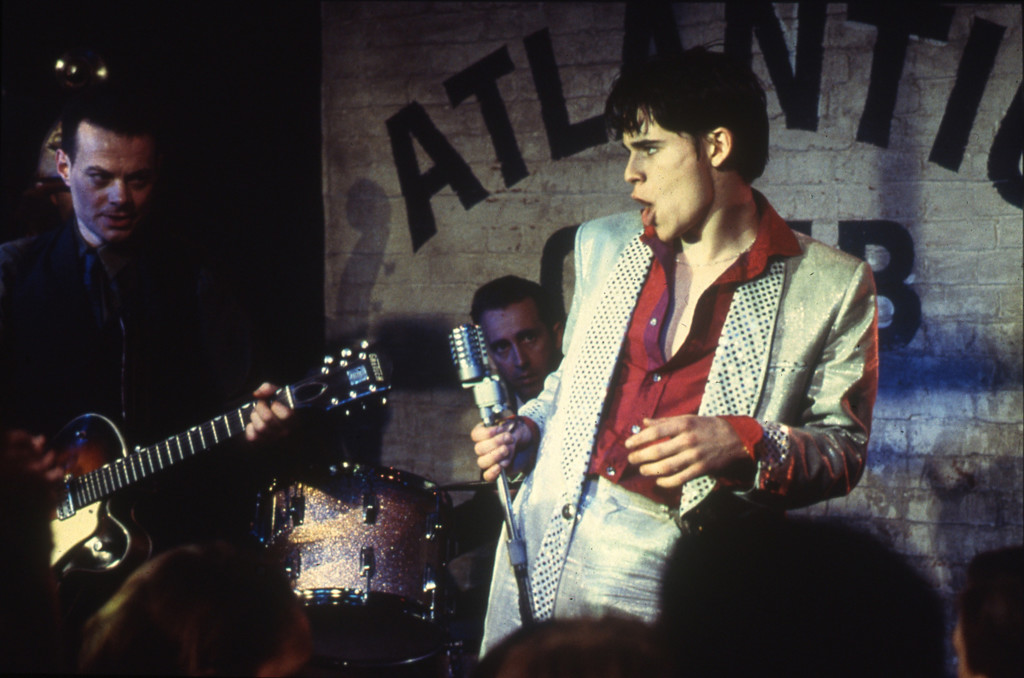
For our first official play we are performing Mojo by Jez Butterworth, a dark comedy based in Ezra’s Atlantic Club, Soho, London, 1958. It’s a male based cast with only 6 main characters, no smaller characters are included and it consists of two acts only.
The plot is centered all around the club, where two rival gangs fight over this young 17 year old boy called Silver Johnny who is rising to fame thanks to his voice as well as looks. Ezra the owner of the bar is killed off in the first act off screen and the rest of his club freak out once hearing of his death by Mickey his second in command. It is important to remember Micky, being he was involved with Ezra’s murder which we find out about later on near the end of the play.
Sam Ross a gangster/entrepreneur saws Ezra in half and chucks him in the bins out back of Ezra’s club for the rest of his gang to find, meanwhile also kidnapping Silver Johnny. This all happens after a meeting between the two men about Silver Johnny’s fate, it is made clear from the start that Ezra wasn’t going to give Johnny up being he was the money maker and Ross knew that the only way he was going to get the boy was by eliminating the composition.
The first act is all about Ezra’s group of drugged up men (except Mickey) coming to turns with Ezra’s death and freaking out about their own safety. Locking themselves in the club with limited supplies, no weapons for defence apart from an old cutlass and an unstable Baby who could blow at any moment.
Act two is where the group get answers after Mickey kicks Baby out the club and he goes in search for Silver Johnny, who he then finds with Mr Ross and kills the old man before taking Johnny back to the club. The group find out Mickey was involved in murdering Ezra in order to take over as the club owner; Skinny doesn’t believe a word Baby says, defending Mickey all the way and in turn gets shot by Baby, bleeding out in Mickey’s arms, dying a slow and painful death he did not deserve. Potts kicks Mickey in the stomach before he and sweets leave the club, Baby and Silver Johnny soon following, leaving Mickey on the floor by Skinny. Mickey is in fact a coward, he acts as the one in charge all throughout the play, the group looking to him for guidance but in the end the truth was to be revealed and his plans at being boss destroyed.
Characters
Baby the son of Ezra is the craziest, the nutter if you will, of the bunch, always threatening to harm Skinny, the weakest of the group. He’s always drunk or high or both throughout the play until the end. He has a no care attitude, always doing as he pleases, irritating Mickey when they find out Ezra’s dead, picking on Skinny to the point of hurting him and being the most damaged character of them all. It’s like a competition between him and Silver Johnny in the beginning because Baby’s dad is only obsessed with the young star while being ashamed of his own son, that’s why Baby does what he does.
Silver Johnny is a kid good at what he does, singing, dancing, bringing the money in and good at getting caught in between fights that are all about him.
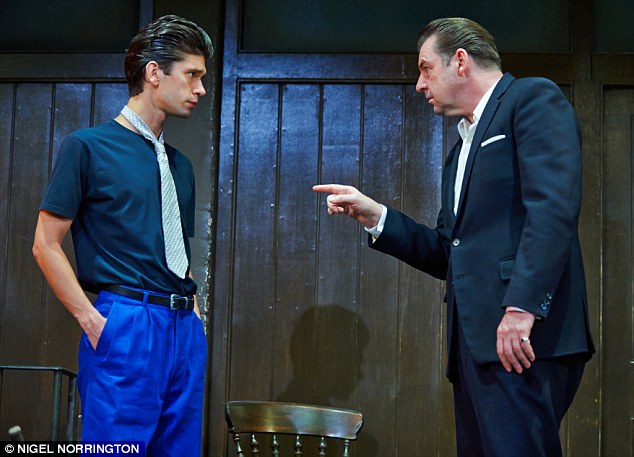
Mickey, one of my favourite characters, he keeps the others in line and takes no rubbish from nobody. He was Ezra’s second in command and proceeds to be so until everything is revealed in the end. Wanting the club meant having to deal with Baby, he doesn’t kill him because he needs him as the face of the business, so if anyone were to come after the club they’d go after Baby not him, it’s almost like Baby is his shield which is ironic being he is his downfall.
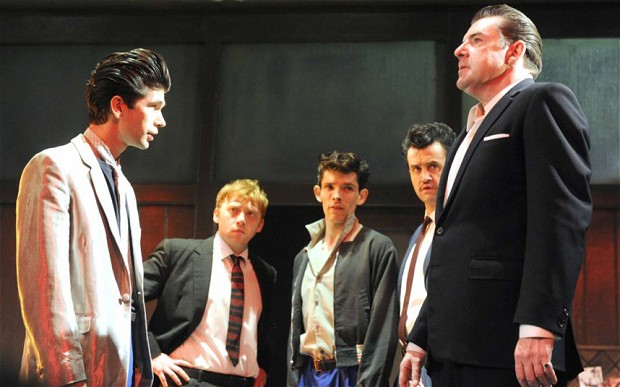
Mr Ross on the left, my man Mickey on the right.
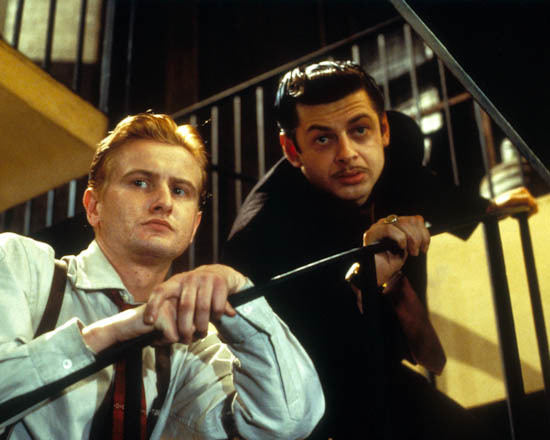
Mickey had a peculiar relationship with Skinny, a very interesting one that leads the audience to believe they were secretly in a sexual relationship or it could be the other way completely and he saw the man like a son, a father figure if you will. He is distraught when Skinny dies and that is the final nail in the coffin, while everyone else was in shock and hurt at the fact that their friend was dying before their very eyes he actually holds the other man crying heavily, whispering into his ear remaining beside him.
Sweets is the man with the pills and sadly for himself isn’t the smartest tool in the shed, he tells on Potts his best mate without knowing, thinking he’s doing the right thing by mentioning to Mickey that Ross was indeed there having a meeting with Ezra about Silver Johnny the night before. Mickey was, “suffering with a head cold,” so he never knew about the situation. Sweets is the one everyone turns to for the drugs, he and Potts. The two men are never apart, like tweedle dee and tweedle dum. One can’t be without the other.
Potts isn’t afraid to stand up to Mickey because he knows he doesn’t work for him, he works for Ezra, the two clash a few times just like Mickey and Baby but they normally make amends quickly unlike Baby and Mickey. I believe Baby knew straight away that something was up with how Mickey was reacting to the situation around him.
Skinny Luke the man who stands out among the rest, he doesn’t belong in this mess and that is clear from the start. He can’t stand up for himself, always turning to Mickey for support. He dresses like Baby in order to feel like he belongs while also looking up to the man which is very interesting being he always scares him into submission making him want to leave and never come back.
I hate how it’s Skinny Luke who dies in the end, his protectiveness over Mickey and anger towards Baby gets him caught in the cross fire, he was in the wrong place at the wrong time. It makes me wonder if Baby did intend to kill Mickey but instead shot Luke in order to make Mickey suffer more or if his anger just got the better of him and shot Skinny because of it. Did Baby know something was going on between the two or was it just coincidence?
As our first project we have been given a scene from a
Shakespeare play, mine being Hamlet. I have been partnered with Izzy Gorman,
she is to play Hamlet while I play his mother the Queen. These characters were
given to us to test ourselves, I am not one to play many female roles and the
same goes for Izzy only with male roles. We have been given Act 3 Scene 4, the
one where Hamlet confronts his mother about King Claudius.
The story of Hamlet is a complex one but to put it simply it
is about betrayal, trust, mental illness, how much the mind can take before
snapping and in some ways love.
The late King, King Hamlet’s ghost tells his son Hamlet how
his brother Claudius, the new king was the one that killed him while also
marrying his wife the Queen who doesn’t seem to question anything. Hamlet
swears revenge under his father’s orders.
The situation grows complicated when the revenge is dragged
out thanks to Hamlet being contemplative and thoughtful by nature. This soon
drives him to insanity, he did not ask for all this to happen nor did he wish
to see his father again in spirit form. I believe he wished he’d have never
found out and would have been much happier never knowing or at least dealt with
it better.
After his first attempt at killing Claudius fails, Hamlet is
sent to England by the King as he’s now fearing for his life. Hamlet got a
group of travelling actors to perform a scene in front of the King and Queen
that involves the death of a king to see if it catches Claudius off guard, it
does and in turn he goes to finish the job once and for all. Hamlet stops
himself however when seeing the king praying alone just in case his soul is
sent to heaven, a place he most certainly doesn’t belong.
The Queen is then confronted by her son in her room,
Polonius the chamberlain eavesdropping in on their conversation ends up getting
killed off by Hamlet when he believes Polonius is the king listening in.
For his crime Hamlet is sent straight to England but his
thought to be friends who accompany him have secret orders to the King of
England that Hamlet be put to death. This is Claudius’s doing but his plan
fails when Hamlet returns from his journey because his ship was attacked by
pirates.
Near the end of the play Hamlet has a fencing match with
Laertes, Polonius’s son who wants revenge on the prince after he kills his
father and sister Ophelia who drowns in the river from grief and her own
insanity when finding out about her father’s death.
Claudius poisons Laertes’s blade in order to kill Hamlet, if
all else fails he poisons a goblet to give to Hamlet if he were to win. Hamlet
wins the first point but does not drink from the goblet instead Gertrude his
mother drinks from it and shortly dies afterwards not before warning Hamlet
about Claudius.
Laertes succeeds in wounding Hamlet who doesn’t die straight
away. Laertes instead gets hurt by his own sword and before dying admits to
Hamlet that it was in fact the king who killed the Queen. Hamlet finally kills
Claudius achieving his revenge before giving in to the grip of death himself
its all finally over.
Horatio fulfilling Hamlet’s last request tells the man’s
story to Fortinbras, a Norwegian prince who arrived in Denmark with his army
only to witness the aftermath of it all. Fortirbras orders that Hamlet be
carried away in a manner befitting a fallen soldier.
Act 3 Scene 4
Gertrude is in her room getting ready to settle in for the
night while Polonius speaks to her about her son, he tells her to be John Blunt
with Hamlet, all that he’s done has offended the king and he needs to grow up
and stop all this nonsense. Agreeing the Queen gets the chamberlain to leave,
he hides, before straightening her composure when Hamlet bursts in like a
misbehaved child calling out for their mother.
The two argue for a minute before it turns aggressive almost
immediately. Gertrude tries to get her son to see some sense but he’s having
none of it, she’s the one that married a murder as well as his father’s brother
and she has the right to be angry at him?! No, she’s needs to be put in her
place, Hamlet is not the evil one here she is for making such a sickening
choice.
Back in the medieval times around the 1300s to 1499s where
Hamlet was set, women were seen as lower class citizens compared to men, so
that meant they got paid less and had to take up more than one job in order to
get paid around the same amount as men. They were taught to obey men from their
fathers up to their husbands when they got married.
The statues of a Queen however was different from that of a
average everyday working women in the middle ages. They had much more power in
the respect that they could make choices in a time where their husband is
absent or their son is not of age to make a wise enough decision.
It is clear that throughout their argument Gertrude fears
her son and isn’t one who would normally stick up for herself, she is talking
on behalf of Claudius not herself. This is clear from the very beginning when
she speaks the line,” Hamlet, thou hast thy father much offended.” It does not
matter what she feels about the situation it is Claudius that comes first
before her own emotions.
Hamlet’s threatening manner causes his mother to scream out
for help, her rash and fear struck action ends up getting Polonius killed by
her son who doesn’t think twice about killing the man he hoped to be the king
hiding behind the tapestry with his sword. When realizing it is not King
Claudius, Hamlet sweeps Polonius under the rug, saying how he got what he
deserved for prying.
Hamlet despises love and women by this point in the play
because he cannot get over the fact that his mother has betrayed her husband by
marrying Claudius. This is shown by the quote, “Takes off the rose from the
fair forehead of an innocent love and sets a blister there.” He’s implying that
the love his mother had for his father was false, tainted otherwise why would
she remarry!
Not making it known right away causes Gertrude to question
her son, asking what deed could be so awful when he has yet to explain it.
Snatching up a picture of the late king as well as Claudius Hamlet forces his
mother to look down upon them both praising his father treating him like a god,
a man even gods couldn’t live up to. This tells me that Hamlet admired his
father as a human being and king.
From elegant to sharp and bitter in a split second the son
proceeds to mock, criticize and detest his mother for making the situation
worse by moving from one man to another so swiftly. It was not out of love, at
her age passion for another was frail almost non-existent, she only did it out
of reason to keep her status.
What also makes the whole scene worse is the fact that we
find out that the Queen is indeed sleeping with the king and she admits to it
telling Hamlet to please stop, guilt clear in her speech as she calls what she’s
doing a sin.
As the fight continues the ghost of King Hamlet appears in
the room, only his son can see him. Hamlet imminently starts talking to his
father making himself look very unstable in front of his own mother. The ghost
tells Hamlet to talk to his mother, not scare her anymore as well as reminding
him of the revenge.
The ghost’s appearance doesn’t help in anyway, Hamlet tries
to get his mother to see what he sees but instead only increases her concern.
This begs the question of why can’t Gertrude see the ghost? Does it suggest
Gertrude’s innocents or lack thereof any involvement with her late husband’s
murder? I believe this to be true being the apparition of King Hamlet tells his
son to back off from his mother and carry out his revenge, this telling me that
the Queen had no idea about of the cruel acts that took place upon her husband.
Either way the ghost calms Hamlet down, the scene comes to a
more rational conversation between mother and son. Announcing that his madness
is all an act, Hamlet urges her to forsake Claudius and regain her good
conscience also mentioning before he leaves how not to tell the king of his
secret; though she is very shaken Gertrude agrees to keep her son’s act a
secret before listening to how Hamlet finally takes notice of Polonius’s body
again and explains to her how this is god’s way of punishing him, leaving
straight after dragging the lifeless corpse out behind him.
By the end, though she tries to make an effort to understand
her son and despite his warnings of King Claudius Gertrude still believes that
her son is mad.
Monday 23rd September 2019
Progress
I have learnt and performed alongside Izzy the first two
pages of our scene, one of the hardest beginnings to start off with. We have
blocked the rest and now putting ideas into action. The relationship between
Gertrude and her son is questionable at best. In many interpretations of the
scene that I have watched, Hamlet is abusive and reckless towards his mother
making you feel very uncomfortable and uneasy at first not knowing what to
expect next. Andrew Scott and David Tenant are prime examples of this kind of
approach to the role because when watching them I didn’t feel sorry for Hamlet
as a character right away, only disturbed but as the scene progressed the man
became undone showing his true pain and suffering making me feel sorrow and
announce that no one really understood what he was going through by himself. As
a mother Gertrude should see this but her fear has consumed her and all she
sees in front of her is a sick man who needs help, one who has been misguided
by the path of faith.
Our pace needs more work, we are still on scripts which are
restricting us and leading us to slow down without meaning to. The beginning is
good but it could be better in the respect that there could be more movement on
Hamlet’s part in cornering his mother at all times not letting her get the
upper hand at all.
The characters are there and our teacher Jamie likes my interpretation of Queen Gertrude fearing for her life, panicked and clueless. My natural starting point when creating a character is preferably masculine, serious and to a certain extent authoritarian; therefore this role is challenging for me because it does not have any of the character traits that I normally portray.
I cannot relate to Gertrude being she is a queen and a mother
but with the help of actors who have played her I have come to understand what
kind of person she is. A women who I believe had no part in the killing of her
husband and stayed true to her duty as a Queen, she didn’t marry Claudius out
of love but perhaps for the future of her families wellbeing and in order to
one day see Hamlet become king. This is not specified within the play but
that’s the fun of trying to figure characters out.
Inspiration
Juliet Stevenson: Role of Gertrude in the 2018 adaptation of
Hamlet.
Penny Downie: Role of Gertrude in the 2009 remake of Hamlet.
Glenn Close: Role of Gertrude in the 1990 movie of Hamlet.
Friday 27th September 2019
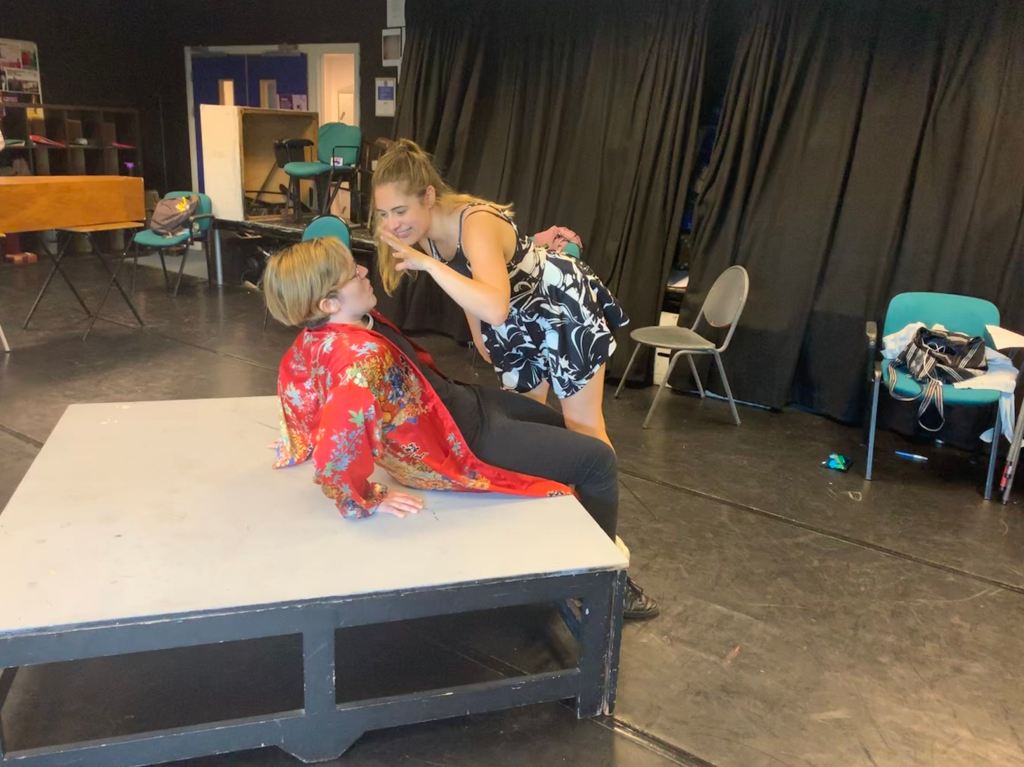
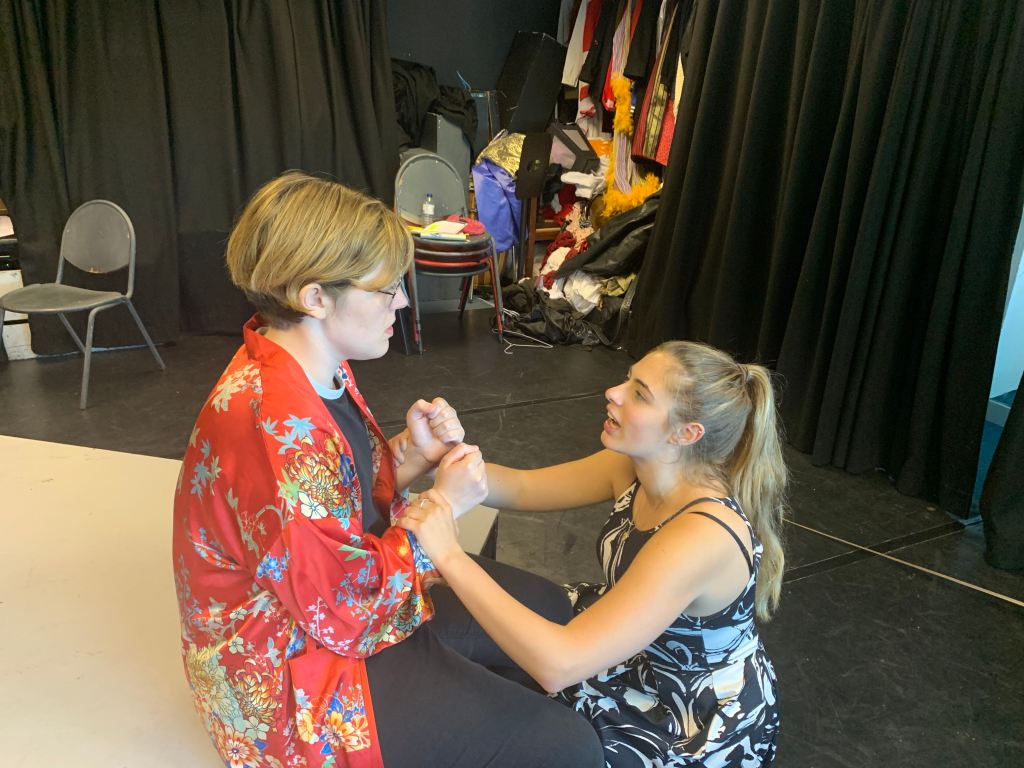
As seen in the videos above Izzy and myself have got the characters and staging ready, the pace needs to be snappier and the audience needs to feel the emotions of the whole scene. They need to feel unnerved by Hamlet’s actions and speech towards his mother as well as feeling almost sorry for him.
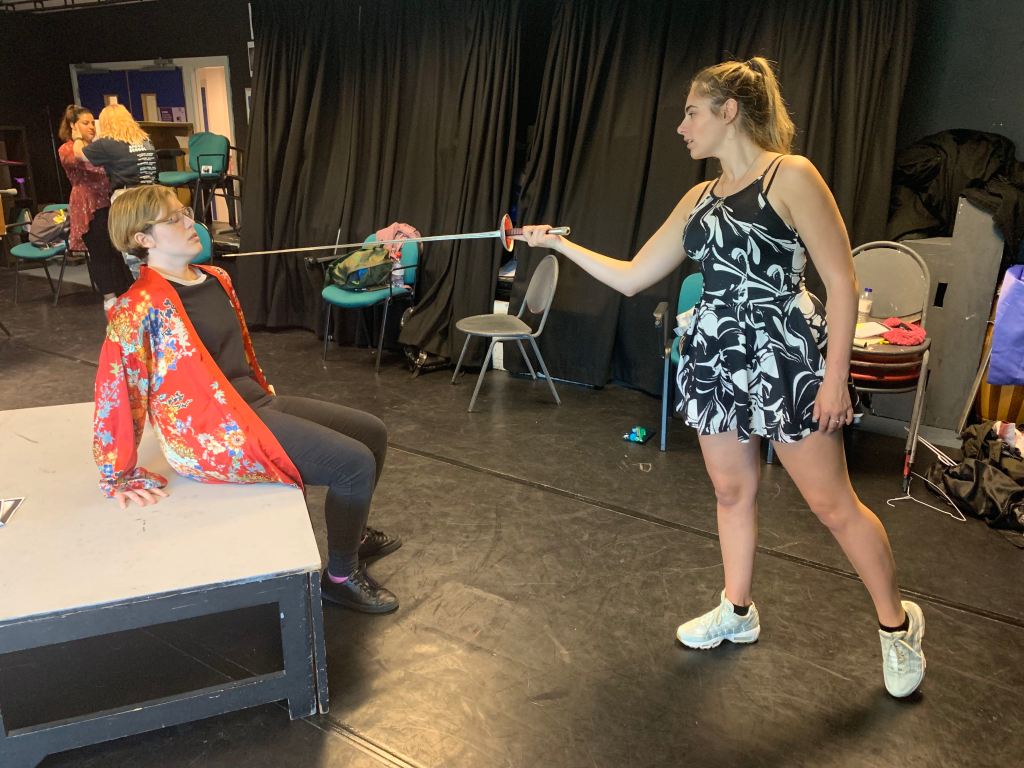
We need to get our outfits sorted and make the piece of staging we’re using as a bed look more presentable. We have swapped the sword for a gun because in our version it is more effective, unlike the sword which slowed it all down and made it awkward.
My body language at the beginning clearly shows that I am of high status but it quickly changes to that of a trembling women who doesn’t know what to do with herself considering her own son has her corner on the bed for the majority of the scene. My facial expressions show constant fear, dread and confusion as if I’m fearing for my life.
Monday 30th September 2019
First Performance and my favorite out of the two, if only we had the noise of the gun to allow the whole experience.
Not my best performance but this was the one we showed to a group of people and the gun made my reaction all the more better then the first.
Evaluation
The very first performance we did was out of the two in my opinion in the best, one being I got all my lines and two even though the gun sound in the second made the whole effect of shooting someone real the scene didn’t work out how I wanted it to.
Strengths Within First Performance
Our pace was slick and smooth.
My facial expressions were constantly changing to the emotions that fitted with the circumstance.
Every time I as the Queen would try to speak, Hamlet would knock me right back down again until he had me cornered on the bed.
Izzy’s movement was unpredictable and that made the scene so much better in the sense that I didn’t know what she was going to do next giving me all the more reason to feel nervous not only as the queen but as an actor too.
Some words I originally said incorrect like “Twain,” I said it as “Twine,” when in rehearsals but in the actual shows I corrected myself.
Improvements
I lost the words for a moment when Hamlet tries to get me to see the king my husband but luckily it seemed like i was just overcome my fear and concern. Next time however I made sure to speak it clearly the second time just in case the audience missed the line all together.
I was out of lighting when me and Izzy were on the floor to the right of the stage.
Strengths on Second Performance
Reaction to the gun was real with a hint of fear added in. (Also the cry you hear in the video is not me but another actor playing as Polonius behind the curtain off screen.)
Izzy’s Hamlet was brilliant throughout both performances, she pulled him off really well considering she really struggled with his character in the beginning.
The way Izzy slowly climbs onto the bed and grabs a pillow very subtly for throwing it off the bed was very successful it really worked!
I said a few sentences out of order but i made them work without breaking character and making it obvious.
Izzy slamming her foot onto the bed made for a cool moment.
Improvements
Izzy came on a little too early, Mae (Polonius) was still on stage when she came on and she’s not meant to know she’s there.
I felt like the pace was to rushed like we just wanted to get it done, that’s why the mistakes could be seen more clearly but it was in fact the adrenaline that caused this.
Should have looked more to the audience when freezing in fear at the gun going off so they could see my face clearly.
Sat down to quickly when Izzy comes to talk to me after looking over the corpse.
The paragraph where I try to get Hamlet’s attention was one I struggled with for the most of practice and to see me miss it in our final performance hurts considering I knew it and could have done it but it is what it is.
Overall Shakespeare isn’t my strongest suit but I’ll happily do it again, learn the language and take on the challenge of creating my own version of the characters! It was so much fun working with Izzy, we have come a long way with Shakespeare in the past few short weeks and continue to grow as actors. Next time I would love to try Hamlet!





 Helen's Performing Arts Life