Featured

My First Blog Post

Getting to Grips with Shakespeare

To be or not to be

Hamlet

Monday 16th September 2019

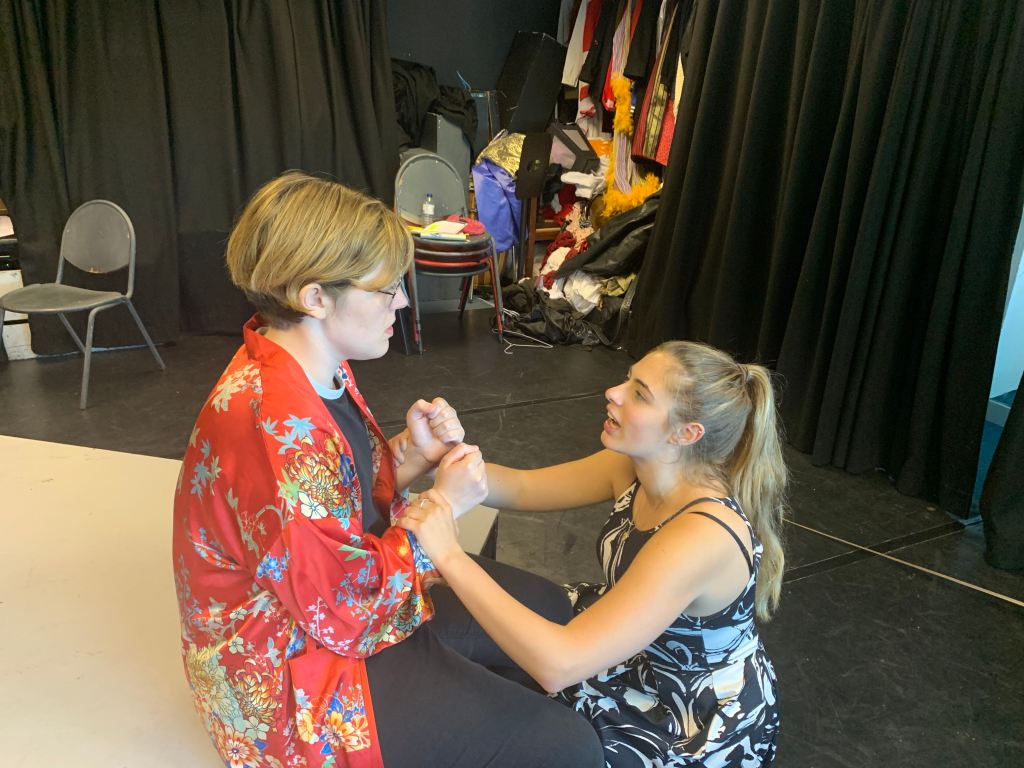
As our first project we have been given a scene from a Shakespeare play, mine being Hamlet. I have been partnered with Izzy Gorman, she is to play Hamlet while I play his mother the Queen. These characters were given to us to test ourselves, I am not one to play many female roles and the same goes for Izzy only with male roles. We have been given Act 3 Scene 4, the one where Hamlet confronts his mother about King Claudius.

The story of Hamlet is a complex one but to put it simply it is about betrayal, trust, mental illness, how much the mind can take before snapping and in some ways love.

The late King, King Hamlet’s ghost tells his son Hamlet how his brother Claudius, the new king was the one that killed him while also marrying his wife the Queen who doesn’t seem to question anything. Hamlet swears revenge under his father’s orders.

The situation grows complicated when the revenge is dragged out thanks to Hamlet being contemplative and thoughtful by nature. This soon drives him to insanity, he did not ask for all this to happen nor did he wish to see his father again in spirit form. I believe he wished he’d have never found out and would have been much happier never knowing or at least dealt with it better.

After his first attempt at killing Claudius fails, Hamlet is sent to England by the King as he’s now fearing for his life. Hamlet got a group of travelling actors to perform a scene in front of the King and Queen that involves the death of a king to see if it catches Claudius off guard, it does and in turn he goes to finish the job once and for all. Hamlet stops himself however when seeing the king praying alone just in case his soul is sent to heaven, a place he most certainly doesn’t belong.

The Queen is then confronted by her son in her room, Polonius the chamberlain eavesdropping in on their conversation ends up getting killed off by Hamlet when he believes Polonius is the king listening in.

For his crime Hamlet is sent straight to England but his thought to be friends who accompany him have secret orders to the King of England that Hamlet be put to death. This is Claudius’s doing but his plan fails when Hamlet returns from his journey because his ship was attacked by pirates.

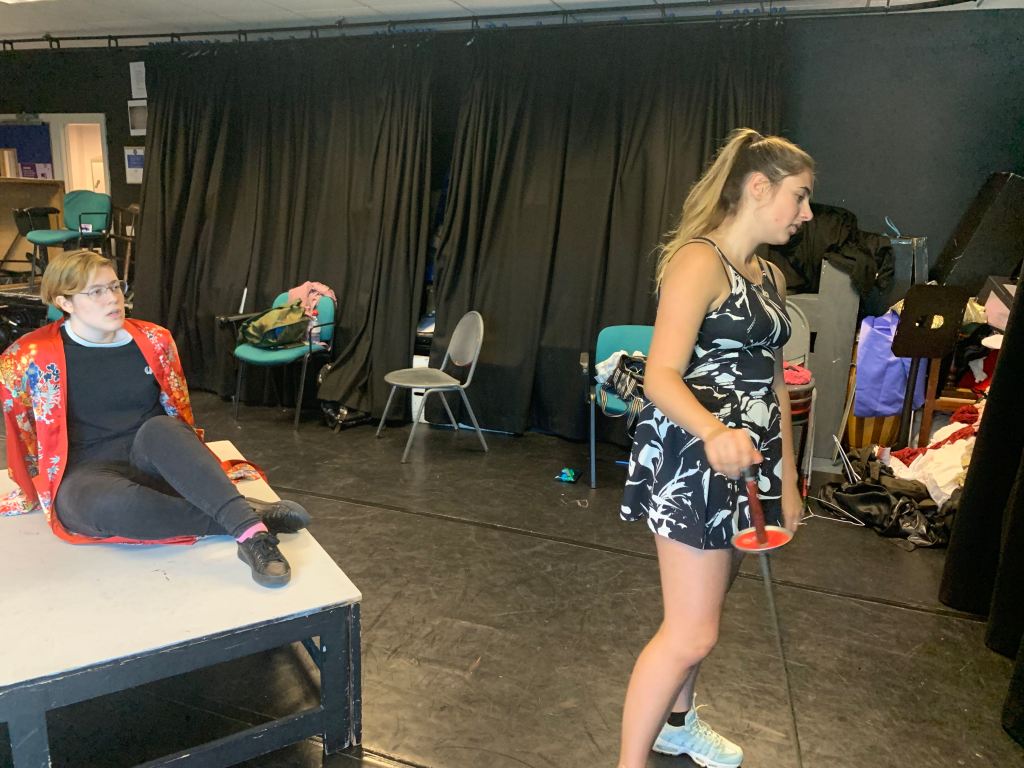
Near the end of the play Hamlet has a fencing match with Laertes, Polonius’s son who wants revenge on the prince after he kills his father and sister Ophelia who drowns in the river from grief and her own insanity when finding out about her father’s death.

Claudius poisons Laertes’s blade in order to kill Hamlet, if all else fails he poisons a goblet to give to Hamlet if he were to win. Hamlet wins the first point but does not drink from the goblet instead Gertrude his mother drinks from it and shortly dies afterwards not before warning Hamlet about Claudius.

Laertes succeeds in wounding Hamlet who doesn’t die straight away. Laertes instead gets hurt by his own sword and before dying admits to Hamlet that it was in fact the king who killed the Queen. Hamlet finally kills Claudius achieving his revenge before giving in to the grip of death himself its all finally over.

Horatio fulfilling Hamlet’s last request tells the man’s story to Fortinbras, a Norwegian prince who arrived in Denmark with his army only to witness the aftermath of it all. Fortirbras orders that Hamlet be carried away in a manner befitting a fallen soldier.

Act 3 Scene 4

Gertrude is in her room getting ready to settle in for the night while Polonius speaks to her about her son, he tells her to be John Blunt with Hamlet, all that he’s done has offended the king and he needs to grow up and stop all this nonsense. Agreeing the Queen gets the chamberlain to leave, he hides, before straightening her composure when Hamlet bursts in like a misbehaved child calling out for their mother.

The two argue for a minute before it turns aggressive almost immediately. Gertrude tries to get her son to see some sense but he’s having none of it, she’s the one that married a murder as well as his father’s brother and she has the right to be angry at him?! No, she’s needs to be put in her place, Hamlet is not the evil one here she is for making such a sickening choice.

Back in the medieval times around the 1300s to 1499s where Hamlet was set, women were seen as lower class citizens compared to men, so that meant they got paid less and had to take up more than one job in order to get paid around the same amount as men. They were taught to obey men from their fathers up to their husbands when they got married.

The statues of a Queen however was different from that of a average everyday working women in the middle ages. They had much more power in the respect that they could make choices in a time where their husband is absent or their son is not of age to make a wise enough decision.

It is clear that throughout their argument Gertrude fears her son and isn’t one who would normally stick up for herself, she is talking on behalf of Claudius not herself. This is clear from the very beginning when she speaks the line,” Hamlet, thou hast thy father much offended.” It does not matter what she feels about the situation it is Claudius that comes first before her own emotions.

Hamlet’s threatening manner causes his mother to scream out for help, her rash and fear struck action ends up getting Polonius killed by her son who doesn’t think twice about killing the man he hoped to be the king hiding behind the tapestry with his sword. When realizing it is not King Claudius, Hamlet sweeps Polonius under the rug, saying how he got what he deserved for prying.

Hamlet despises love and women by this point in the play because he cannot get over the fact that his mother has betrayed her husband by marrying Claudius. This is shown by the quote, “Takes off the rose from the fair forehead of an innocent love and sets a blister there.” He’s implying that the love his mother had for his father was false, tainted otherwise why would she remarry!

Not making it known right away causes Gertrude to question her son, asking what deed could be so awful when he has yet to explain it. Snatching up a picture of the late king as well as Claudius Hamlet forces his mother to look down upon them both praising his father treating him like a god, a man even gods couldn’t live up to. This tells me that Hamlet admired his father as a human being and king.

From elegant to sharp and bitter in a split second the son proceeds to mock, criticize and detest his mother for making the situation worse by moving from one man to another so swiftly. It was not out of love, at her age passion for another was frail almost non-existent, she only did it out of reason to keep her status.

What also makes the whole scene worse is the fact that we find out that the Queen is indeed sleeping with the king and she admits to it telling Hamlet to please stop, guilt clear in her speech as she calls what she’s doing a sin.

As the fight continues the ghost of King Hamlet appears in the room, only his son can see him. Hamlet imminently starts talking to his father making himself look very unstable in front of his own mother. The ghost tells Hamlet to talk to his mother, not scare her anymore as well as reminding him of the revenge.

The ghost’s appearance doesn’t help in anyway, Hamlet tries to get his mother to see what he sees but instead only increases her concern. This begs the question of why can’t Gertrude see the ghost? Does it suggest Gertrude’s innocents or lack thereof any involvement with her late husband’s murder? I believe this to be true being the apparition of King Hamlet tells his son to back off from his mother and carry out his revenge, this telling me that the Queen had no idea about of the cruel acts that took place upon her husband.

Either way the ghost calms Hamlet down, the scene comes to a more rational conversation between mother and son. Announcing that his madness is all an act, Hamlet urges her to forsake Claudius and regain her good conscience also mentioning before he leaves how not to tell the king of his secret; though she is very shaken Gertrude agrees to keep her son’s act a secret before listening to how Hamlet finally takes notice of Polonius’s body again and explains to her how this is god’s way of punishing him, leaving straight after dragging the lifeless corpse out behind him.

By the end, though she tries to make an effort to understand her son and despite his warnings of King Claudius Gertrude still believes that her son is mad. 

Monday 23rd September 2019

Progress

I have learnt and performed alongside Izzy the first two pages of our scene, one of the hardest beginnings to start off with. We have blocked the rest and now putting ideas into action. The relationship between Gertrude and her son is questionable at best. In many interpretations of the scene that I have watched, Hamlet is abusive and reckless towards his mother making you feel very uncomfortable and uneasy at first not knowing what to expect next. Andrew Scott and David Tenant are prime examples of this kind of approach to the role because when watching them I didn’t feel sorry for Hamlet as a character right away, only disturbed but as the scene progressed the man became undone showing his true pain and suffering making me feel sorrow and announce that no one really understood what he was going through by himself. As a mother Gertrude should see this but her fear has consumed her and all she sees in front of her is a sick man who needs help, one who has been misguided by the path of faith.

Our pace needs more work, we are still on scripts which are restricting us and leading us to slow down without meaning to. The beginning is good but it could be better in the respect that there could be more movement on Hamlet’s part in cornering his mother at all times not letting her get the upper hand at all.
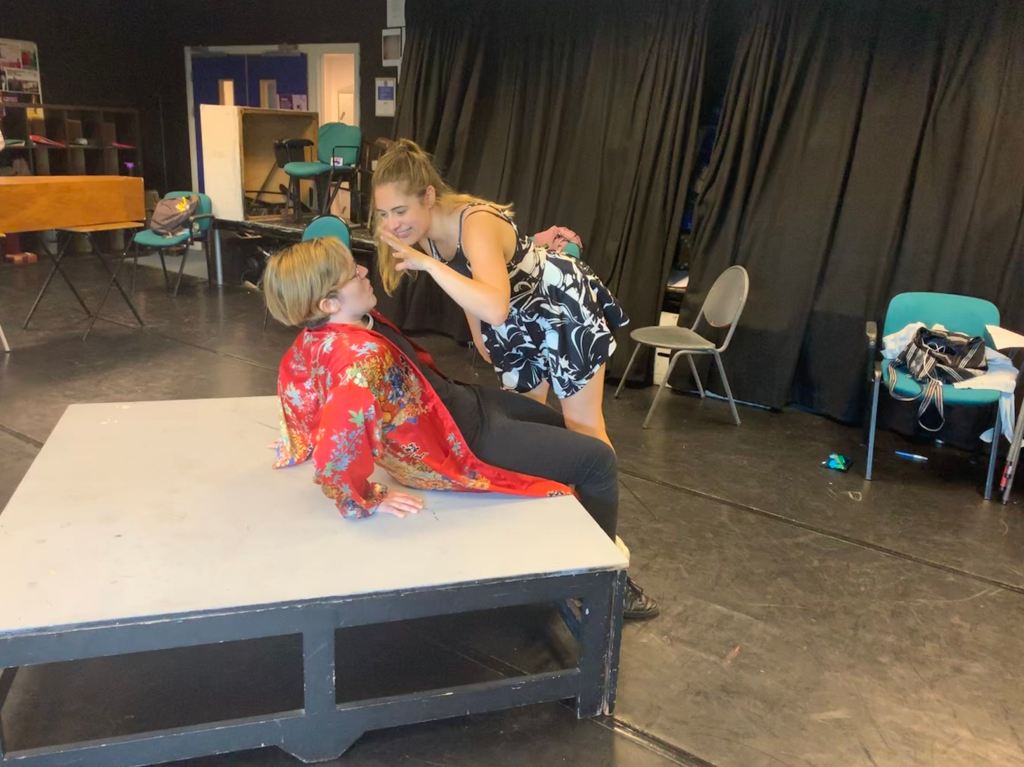
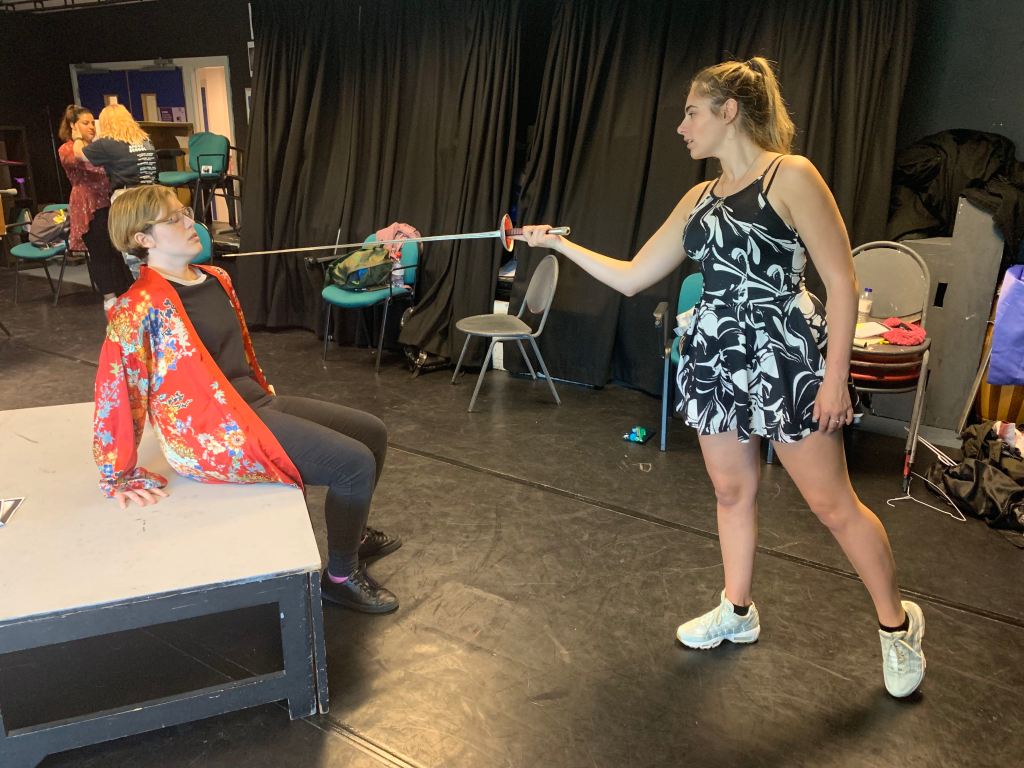
The characters are there and our teacher Jamie likes my interpretation of Queen Gertrude fearing for her life, panicked and clueless. My natural starting point when creating a character is preferably masculine, serious and to a certain extent authoritarian; therefore this role is challenging for me because it does not have any of the character traits that I normally portray.

I cannot relate to Gertrude being she is a queen and a mother but with the help of actors who have played her I have come to understand what kind of person she is. A women who I believe had no part in the killing of her husband and stayed true to her duty as a Queen, she didn’t marry Claudius out of love but perhaps for the future of her families wellbeing and in order to one day see Hamlet become king. This is not specified within the play but that’s the fun of trying to figure characters out.         

Inspiration 

Juliet Stevenson: Role of Gertrude in the 2018 adaptation of Hamlet.  

Penny Downie: Role of Gertrude in the 2009 remake of Hamlet.

Glenn Close: Role of Gertrude in the 1990 movie of Hamlet.

Friday 27th September 2019

As seen in the videos above Izzy and myself have got the characters and staging ready, the pace needs to be snappier and the audience needs to feel the emotions of the whole scene. They need to feel unnerved by Hamlet’s actions and speech towards his mother as well as feeling almost sorry for him.

We need to get our outfits sorted and make the piece of staging we’re using as a bed look more presentable. We have swapped the sword for a gun because in our version it is more effective, unlike the sword which slowed it all down and made it awkward.

My body language at the beginning clearly shows that I am of high status but it quickly changes to that of a trembling women who doesn’t know what to do with herself considering her own son has her corner on the bed for the majority of the scene. My facial expressions show constant fear, dread and confusion as if I’m fearing for my life.

Monday 30th September 2019

First Performance and my favorite out of the two, if only we had the noise of the gun to allow the whole experience.
Not my best performance but this was the one we showed to a group of people and the gun made my reaction all the more better then the first.

Evaluation

The very first performance we did was out of the two in my opinion in the best, one being I got all my lines and two even though the gun sound in the second made the whole effect of shooting someone real the scene didn’t work out how I wanted it to.

Strengths Within First Performance

Our pace was slick and smooth.

My facial expressions were constantly changing to the emotions that fitted with the circumstance.

Every time I as the Queen would try to speak, Hamlet would knock me right back down again until he had me cornered on the bed.

Izzy’s movement was unpredictable and that made the scene so much better in the sense that I didn’t know what she was going to do next giving me all the more reason to feel nervous not only as the queen but as an actor too.

Some words I originally said incorrect like “Twain,” I said it as “Twine,” when in rehearsals but in the actual shows I corrected myself.

Improvements

I lost the words for a moment when Hamlet tries to get me to see the king my husband but luckily it seemed like i was just overcome my fear and concern. Next time however I made sure to speak it clearly the second time just in case the audience missed the line all together.

I was out of lighting when me and Izzy were on the floor to the right of the stage.

Strengths on Second Performance

Reaction to the gun was real with a hint of fear added in. (Also the cry you hear in the video is not me but another actor playing as Polonius behind the curtain off screen.)

Izzy’s Hamlet was brilliant throughout both performances, she pulled him off really well considering she really struggled with his character in the beginning.

The way Izzy slowly climbs onto the bed and grabs a pillow very subtly for throwing it off the bed was very successful it really worked!

I said a few sentences out of order but i made them work without breaking character and making it obvious.

Izzy slamming her foot onto the bed made for a cool moment.

Improvements

Izzy came on a little too early, Mae (Polonius) was still on stage when she came on and she’s not meant to know she’s there.

I felt like the pace was to rushed like we just wanted to get it done, that’s why the mistakes could be seen more clearly but it was in fact the adrenaline that caused this.

Should have looked more to the audience when freezing in fear at the gun going off so they could see my face clearly.

Sat down to quickly when Izzy comes to talk to me after looking over the corpse.

The paragraph where I try to get Hamlet’s attention was one I struggled with for the most of practice and to see me miss it in our final performance hurts considering I knew it and could have done it but it is what it is.

Overall Shakespeare isn’t my strongest suit but I’ll happily do it again, learn the language and take on the challenge of creating my own version of the characters! It was so much fun working with Izzy, we have come a long way with Shakespeare in the past few short weeks and continue to grow as actors. Next time I would love to try Hamlet!

Federico Garcia Lorca

A Spanish Poet, Playwright, artistic director, was born 5 June 1898, Fuente Vaqueros, Spain and went on to become a part of a group of poets called, “Generation 27,” who reinvented Spanish Prose; arose in Spanish literary circles between 1923 and 1927. They helped introduce European concepts like futurism, surrealism and symbolism into the Spanish literary canon!

The circle of poets consisted of Jorge Guillén, Pedro Salinas, Rafael Alberti, Federico García Lorca, Dámaso Alonso, Gerardo Diego, Luis Cernuda, Vicente Aleixandre, Manuel Altolaguirre and Emilio Prados.

They were all born in or after the terrible losses of 1898 when the Spanish Empire collapsed and lost Cuba, Philippines and all round was a devastating time for the country.

The group didn’t fall on the past, they wanted to look to the future, what was happening now in the 1920s which the preceding generation didn’t they were all about 1898. Federico came of age with his generation with the Spanish Republic, 1931, incredibly progressive era. They mirrored the country’s extraordinary growth, rejuvenation, renewed hope and optimism in Spain!

“Gypsy ballads and lament for a bullfighter,” are Federico’s best known collection of poems. Second Golden age of Spanish Theatre!

Personality wise, Federico was mercurial and effervescent, he antagonized people getting a lot of dislike from many however he had many followers and loved ones too. His goal was to get social justice!

His life was cut short when he was assassinated on August 18, 1936, only 38 years old by the supporters of General Francisco Franco during the first months of the Spanish Civil War, his body was never found. It was a cruel tragedy and such talent wasted all because his thoughts, feelings, and opinions caught the wrong people’s attention! He was executed, along with a teacher and two anarchist bullfighters who had fought in the city’s defense against Francisco Franco‘s rebellion. His killers who’s leader had been after Federico to murder him, simply thought he was homosexual!

Franco who live another 39 years, after which Spain would slowly emerge from his repressive shadow to become one of the most liberal nations in Europe. During the nearly three-quarters of a century since his death, García Lorca has entered the canon of world poetry, an eternal rebuke to the enemies of liberty who killed him and to all their kind.

https://www.trtworld.com/video/social-videos/federico-garcia-lorca-literature-showcase/5b179c242f15da048403e56c

http://blogs.britannica.com/2009/08/the-death-and-strange-afterlife-of-federico-garcia-lorca/

It is not fair for one’s life to be taken from them, especially at such a young, fine age where one is still moving up into the world. Federico was and still is through his work an inspiring playwright and proceeds to leave his mark on the world with his beliefs and poems. He was trying to shape the world in his image, a better one where all can come together and move into a peaceful future. Sadly even to this day humanity isn’t together as one, improvements have been made, but as a race we have a very long way to go. little by little.

Yerma – Steven Stone’s Adaptation

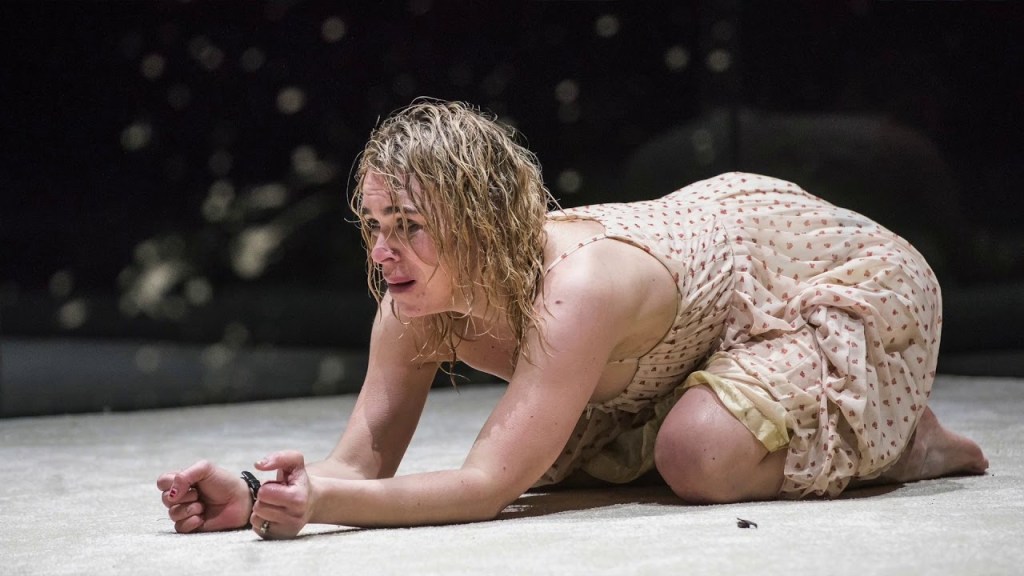
First off, the contemporaneity spin off was very traumatic and disturbing in a way that I will probably never understand. Having a child is meant to be one of the most exhilarating and most beautiful things in the world; I’m on about actually physically seeing the child when thy first arrive, not the sex or the actual pain from giving birth. The fact that Billie Piper’s character was driven to madness because she couldn’t conceive, really does show how far the mind can bend before it snaps. It was false hope more then anything and choosing to believe it really only brought more pain and suffering. A loss and a waste of a life just because she needed that unborn child, she deep down knew she could never have.

The thing that makes it worse is the fact she was leading a good successful life style with a good job as an editor, a house, and her Aussie husband. Its the brutality of a relationship and how far one is to go for the person they love. In her mind as well its the sense of running out of time and getting too old to quickly in order to conceive.

She entered a part of her life where she decided she wanted a child, a natural response. However it was out of her reach, yet she kept pushing for the impossible ruining her own life and letting the unthinkable take control. Those dark nasty thoughts and feelings. One who is of a sane mind, wouldn’t dare allow them to rise to the surface and boil over. Then again there is only a thin line between saintly and insanity, so one who would class themselves as having a stable mind are most likely the craziest of us all.

“Piper’s portrayal of a woman in her thirties desperate to conceive builds with elemental force to a staggering, shocking, climax.”

DramaOnline

The main difference between this adaptation and the original is the time setting, one is in 1934 Spain while the other is placed in a modern day London. Yerma in the original kills her husband by strangling him when finding out he never really wanted a child in the first place. Yerma in turn regrets her fatal, in the heat of the moment job realising that she killed her only chance of ever actually having a baby. The play ends with Yerma saying, “Don’t come near me because I’ve killed my son. I myself have killed my son!”

In the new adaption she kills herself, her final words talking to her child and how she’ll be with them very soon. This is after her husband has left her in their empty cleared out apartment thanks to them having no money and a very catastrophic and much needed fight.

Yerma deals with the themes of isolation, passion, and frustration but also the underlying themes of nature, marriage, jealousy, friendship, anger, denial, regret, loss, pain and madness, losing all sense of self and all concepts of what life is really about, becoming fixated on the impossible and that goes for both play and the new updated version where she actually in the script is called Her and not Yerma.

Lorca’s work is still very much relevant in our modern world now, his work screams truth and talks about problems we still struggle with as a society today. Relationships, love, children, loss, mental health, belief, trust, trauma, sex many things that have moved throughout time with humanity.

The set was very unique, all performed within a glass box, the audience looking in on this world placed inside it. Its a good underlying message on how Yerma’s life feels like its coming at her from all angles, her confrontation blocking out the real world and keeping her in this suffocating environment.

The fast scene changes done by the lighting was so cool and very effective. I didn’t like the use of wording on the screen though, I just felt like it was unnecessary, especially if it was just a day later. Years I can understand but even then I just felt it wasn’t needed. All that could have been done was a clear indication on stage from someone that it was a different time. Now the darkness can be interpreted as a time pass which works but the wording just didn’t do it for me.

I love how it got me thinking it was one thing then the other, like when Her was in fact holding a baby and it was a lovely family setting but it turns out to be her sister’s.

Billie Piper put on such a splendid performance, she said herself it was something different to what she’s done before and it felt very fresh and new coming from her! The way she portrayed this obsessed, sick if you will, delusional women was done with immense fascinating skill! You could tell as the months turned into years how more and more stir crazy she was becoming, getting jealous of her sister being able to have children, blaming her husband for not always being there and slowly being consumed by this hunger for love and passion derived all from this tiny helpless little bundle of what’s suppose to be joy.

At the end where lighting was used to switch from the different point of views, was just astonishing pulling you in with each shift and swift change from one character to the other!

 What started out plummy and over-entitled reduced me to audible gasps as I found myself completely gutted by her obsessive honesty and frightened by her possession. In every way a modern woman she differs from Lorca’s Yerma whose whole reason of being is to provide a child – instead Piper allows this discussion to reflect outwards rather than in projecting modern sensibilities and expectations directly back at you whatever your sex.

https://www.londontheatre.co.uk/reviews/yerma-review-of-billie-piper-in-simon-stones-adaptation-at-the-young-vic

It’s a very misleading play and adapted so well to our society now. Steven Stone gave an exhilarating flare to Lorca’s masterpiece, allowing the audience to be pulled in by his actors clever wit and funny yet rude opening on the subject of sex! We are then pulled in by the main story line and are gripped tightly by it, unable to let go until those final moments where it ends in an explosion of emotion, horror and then sadness.

Oscar Wilde

ICONIC PLAYWRIGHT RIGHT HERE!

Not only was he an author he is a strong LGBT+ icon!

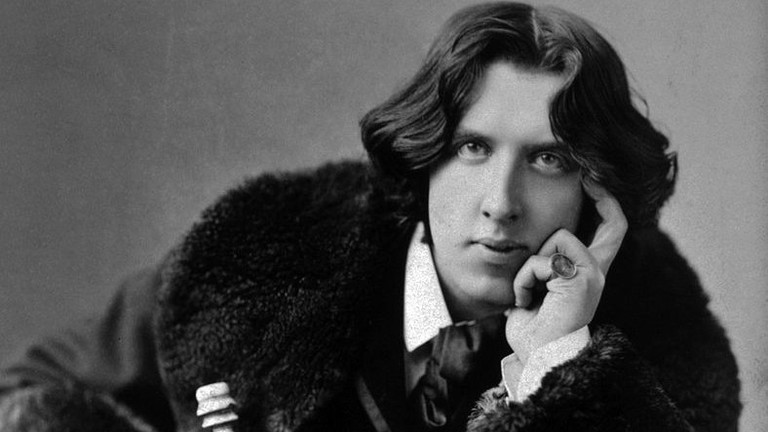
Oscar Fingal O’Flahertie Wills Wilde (16 October 1854 – 30 November 1900)

Specialising in Greek and Roman studies winning some scholarships and rewards. He became an exceptional classicist, first at Trinity College Dublin, then at Oxford. It turns out however Wilde wasn’t the model student considering he followed the aesthetic movement.

The meaning behind the, “Aesthetic Movement,” is, “Art for art’s sake.” Wilde believed in Aestheticism. An intellectual and art movement supporting the emphasis of aesthetic values more than social-political themes for literature, fine art, music and other arts.

1878 he graduated from Oxford and went on to tour America and western Europe teaching lecturers about Aestheticism as well as poetry, and an art critic. In one lecture he met Constance Lloyd who he then went on to get married (1884) with and have two sons, Cyril Holland and Vyvyan Holland.

“Known for his biting wit, flamboyant dress and glittering conversational skill, Wilde became one of the best-known personalities of his day.”

He wrote his first and only novel, “The Picture of Dorian Gray,” in 1890.

After his wife had their second son Wilde was seduced into having sex with a man called Robert (Robbie) Ross. By Richard Ellmann’s account, he was a precocious seventeen-year-old who “so young and yet so knowing, was determined to seduce Wilde.”

At the height of his career, Wilde commenced an affair with a young man named Lord Alfred Douglas also known as Bosie. Douglas’s father when finding out about the affair left a calling card on Wilde’s doorstep calling him a Posing Somdomite. Wilde in turned sued him and ending up ruining his own life. Wilde’s affair with a young man led to his arrest on charges of “gross indecency” in 1895. He was imprisoned for two years and died in poverty three years after his release at the age of 46. 

Robbie Ross was the man who helped Wilde after he was released from prison, gave him a home and was by him on his death bed. He brought all the rights to Wilde’s work back and kept the man’s legacy alive!

Some of his most famous plays are:

  • Lady Windermere’s Fan (1892)
  • A Woman of No Importance (1893)
  • An Ideal Husband (1895)
  • The Importance of Being Earnest (1895)

Oscar Wilde wasn’t afraid to just be himself and that is inspiring to someone like me, he was out and proud in a way, not being ashamed of who he really was! It was unfair what became of him yet his good friend Robbie Ross brought him back to life even in death!

The Importance of being Earnest

The way in which I would describe the movie is, I didn’t get it or not at first anyway. It was quite hard to follow and one I’ll admit I didn’t really get into. It did have it’s eye catching funny moments and made me giggle and question the minds of the men and women back in the 1890’s but overall not my cup of tea. The language was quite hard to follow at times so by the end I did loose the plot and became even more confused when the truth was all revealed. At least it was a happy ending!

Wise Children

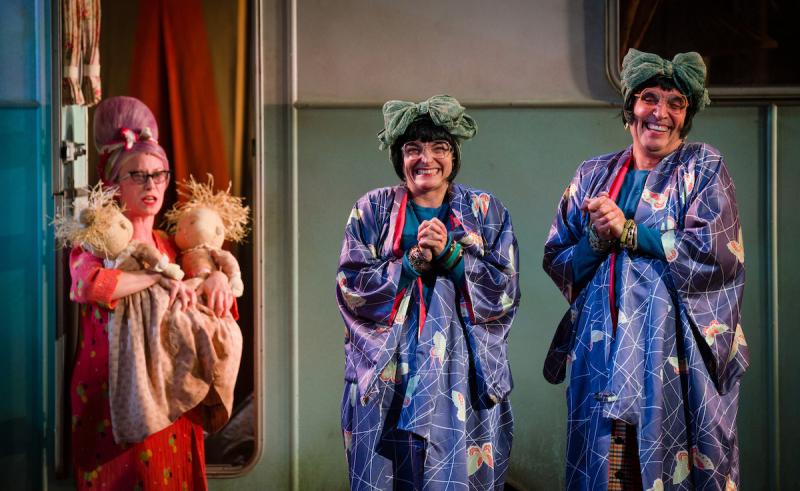
I just finished watching, Emma Rice’s boisterous dark take on Angela Carter’s final novel that she published on 1991. It was well adapted, and the cast’s portrayal was a fine cut to say the least. Having not read the novel I wasn’t sure what to expect and the opening scene made me wonder if I’d actually enjoy it. However it soon drew me in and I was curious to hear the tale of Dora and Nora Chance’s life.

There are a lot of elements that surprised me, I certainly wasn’t expecting the puppets! (Caucasian Chalk Circle or Avenue Q anyone?)

Katy Owen, who played Grandma Chance, was brilliant and reminded me very much of Catherine Tate’s character, Nan. I’m pretty sure that was the idea they were going for, if not then fabulous performance either way, although it came off as disturbing in many ways. There are now images that will remain engraved in my mind for the rest of my life, Thanks Grandma!

I like a bit of dark humor and a heart stopping story line within a good play but the ones in, “Wise Children,” were very serious and touches upon subjects that to many can be very personal but it gets the message across. It spreads a good awareness of neglect, abuse, love, loss, sex and the struggles overall of being born into this world with young immature parents.

Can’t help but love Gareth Snook’s portrayal of 75 year old Dora, done very much in the style of a pantomime dame. It was refreshing to see the cast playing multiple roles regardless of gender and it was wonderful to see the cast move effortlessly between scenes using the caravan as the main focus but giving a clear indication of its use as different buildings.

The dancing was funny, engaging and cheesy at times. The stunts were well performed and solid, the actors moved around then stage flawlessly.

There are some good old classics within the play, these consisting of:

  • Irving Berlin’s “Let’s Face the Music and Dance”
  • Cyndi Lauper’s “Girls Just Wanna Have Fun”
  • The Willow Song” from Othello.

Many that Angela listened to when writing, “Wise Children.”

It wouldn’t be an Emma Rice’s play without some good old Shakespeare. I particularly liked the scene suggesting Shakespeare was a cross dresser.

The ending is like history repeating itself, with Nora and Dora taking in twin girls who have been left on their door step. It was almost like fate, Nora wanting to have children and her wish finally being granted after all those years.

It goes in depth about despite all the hardship, and struggles life throws at you there will always be a time to laugh, sing, dance and be joyful. Though in the beginning I told myself I wasn’t going to enjoy “Wise Children,” my mind went against itself and proceeded to become engrossed in the characters, the acting, the singing, the dancing as well as the strong powerful components and willpower that took the story right out of the book and chucked it directly in our faces!

Frankenstein at The National

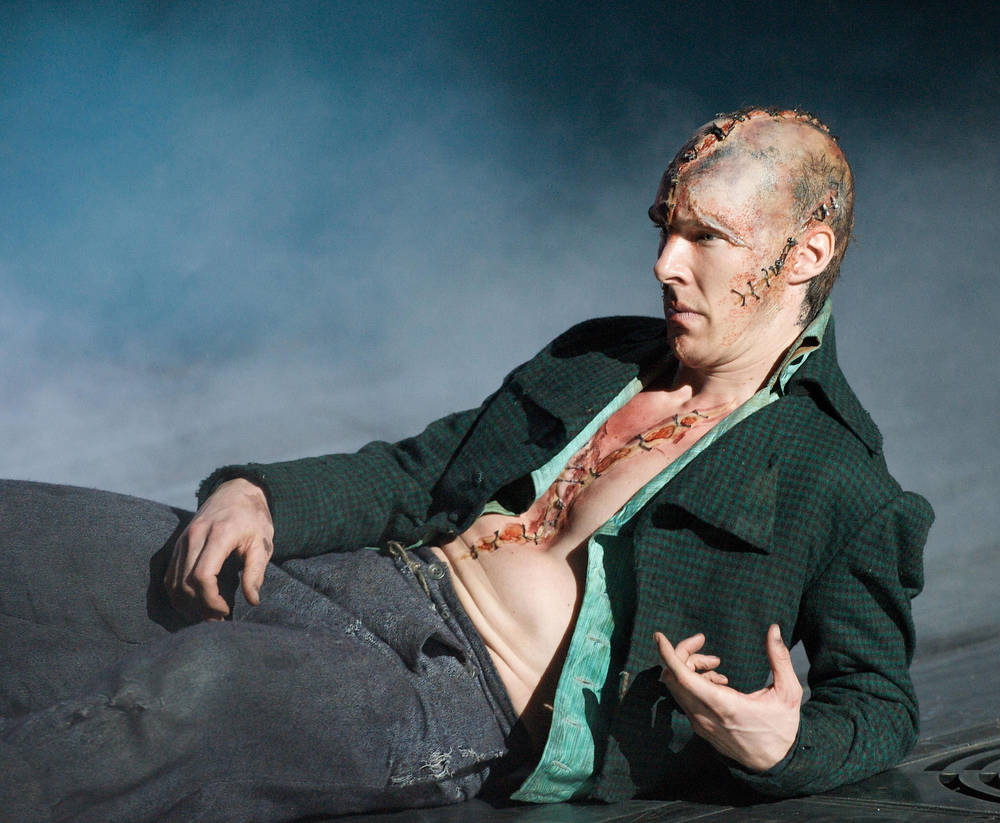
Benedict Cumberbatch as the Monster!

Performed in the Olivier Theatre, I knew I just had to watch Benedict in action as the monster and how he portrayed the misunderstood creature. In the beginning he gave an extraordinary, yet disturbing performance where the monster had just come to life. He was like a new born, contouring his body and strenuously moved his limbs in order to figure out how to walk. I was drawn to him, not able to look away, his large frantic moments, his cries, groans and moans escaping his unused most likely dry, tough, tight throat.

He had a child like innocence, needing someone to turn to, no one complying with his wish to understand his situation. Seeing my most favorite actor struggle as a character in a play or film will always hurt me deeply but I can’t help but love the power and drive as well as the hard work he puts into a character making it significantly unique and his own!

Comparing

No actor is the same, people are noticed because of their different strengths and abilities. I watched certain scenes from Jonny Lee Miller’s version as the monster and his portrayal of the monster had a clear crisp difference to Benedict’s. Miller’s stockier build compared to Ben’s, made him feel more stiff and upright, like how many people would see the original Frankenstein’s monster. Perhaps it was an artistic choice and suited him better rather then trying to compete with his coworker; trying to hard to be the same. What is the fun in trying to compare like for like when the audience can be dragged in because of the different portrayals.

Benedict didn’t feel as threatening when he appeared on stage, nor was I scared of him. He felt very light on his feet, wandering the space more clumsily then heavy footed in the beginning. His exaggerated facial expressions and distorted movement was so eye catching, I couldn’t take my eyes off him but there was also something about him that gave off a great vibe of power. This was made clear when he choked Frankenstein so effortlessly, continuing to speak as the man struggled in his grasp. Almost as if he didn’t realise his own strength!

Benedict’s version I found to be very cute, he was a fast learner but when something new arrived upon him, he would turn into this clueless child, curious to know what it was. He had no real understanding of right from wrong.

Slurred language. Having to force yourself not to speak out in normal sentences, must have been a real challenge for Benedict to maintain. He pulled it off brilliantly, you could really tell he was trying to move and get his mouth round the words like as if he had peanut butter or a toffee in his mouth the whole time.

I also want to add in how the child actor who played as Victor Frankenstein’s younger brother was incredible, I won’t lie, finding a good child actor where they actually perform to a high standard and isn’t just for tricks and a cheap laugh is hard! So hats off to him for in impressive performance!

Some of my favorite lines that reflected our world even in the modern day have stuck with me!

Ones like:

“A vision of perfection,” every human wishes to be perfect, however it is something we just cannot reach. We are only human and we will make mistakes, but ones we can learn from!

“I follow nature into her lair, and I stripped her of her secrets,” Victor has messed with forces beyond his control all in the name of science showing how mad he really had become, to prove to the world there it more then just what lies on the surface!

“I have brought torments of light into a darkening world,” Victor believes he’s bring hope to the world, one that is suffering, yet he risks his own happiness for it. In the end is it really worth it when life on earth is so short?

Acceptance

Belief

Life and death

Symbolism

Love

Hate

Human Nature

Different

Misunderstood

Right

Wrong

Sanity

Insanity

The monster wasn’t born a monster, he was created throughout his life by misguidance, hatred, fear, confusion, regret, belief. Just because one may look different, or be different it doesn’t mean to say they are bad. The monster tired to be the same as humans but learned quickly he’d never be accepted, they detested him.

Trying to find happiness even through all his pain and suffering, the monster wanted to be good, he tried and tried but everything in his dream world of happiness was shattered. It all went back to his master, who made out he despised him, wanted nothing to do with him. Yet by the end of the play, he was all he had left.

Purpose

Desire

Shame

By far one of the most emotional, heart clenching, fascinating, thrilling shows I have watched in a good while! Benedict and Miller couldn’t have done it any better, they worked amazingly well together as well! A brilliant story line and overall a unique experience!

Philip Ridley

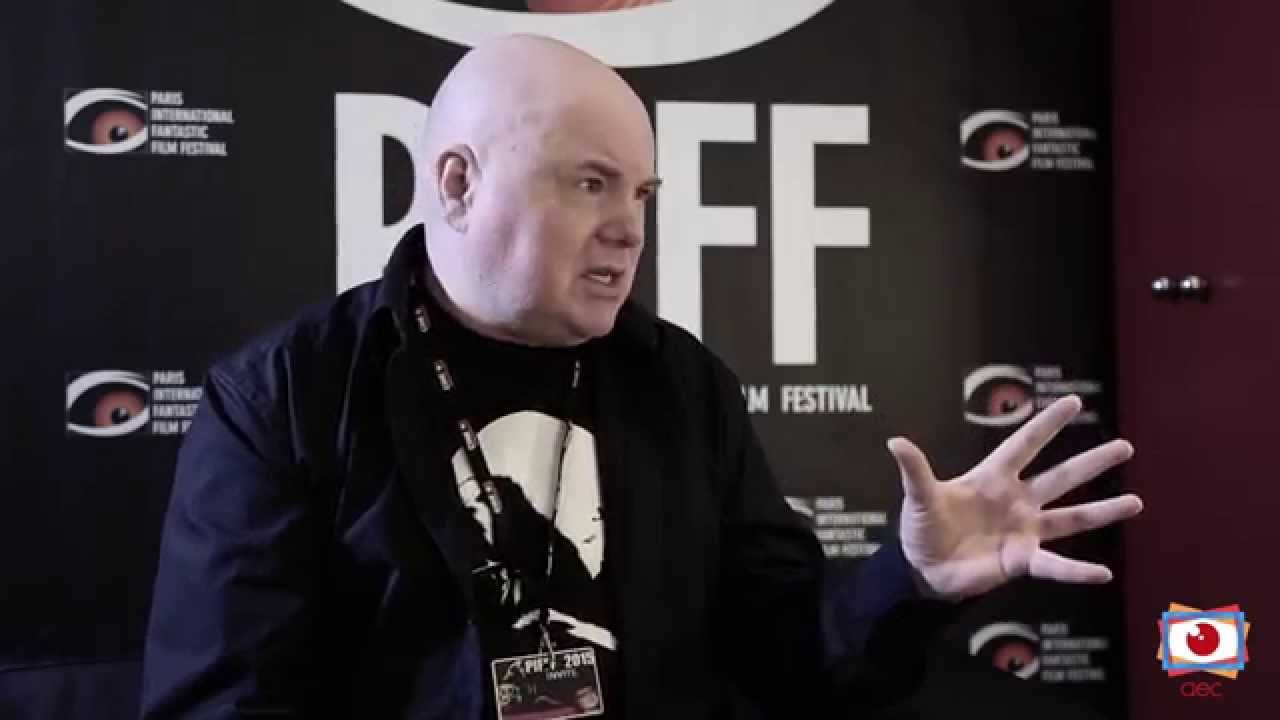
Philip Ridley is a contemporary British author, storyteller, screenwriter and playwright, a poet, photographer, and performance artist. His plays are often set in a dystopian world, and can leave you feeling unsettled but intrigued. He works in a wide range of artistic media. In the visual arts he has been cited as a contemporary to the ‘Young British Artists’, and had his artwork exhibited internationally.

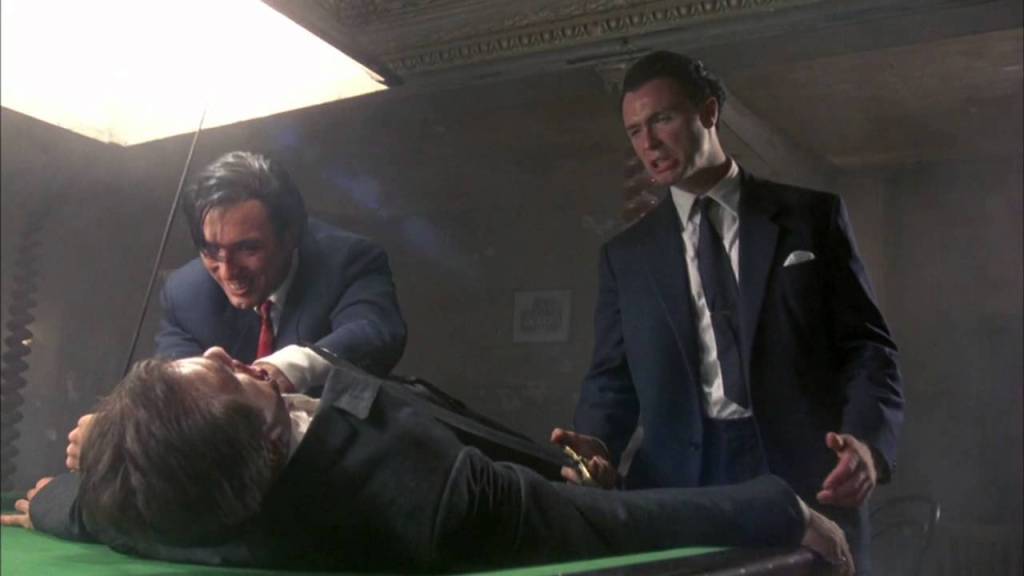
When it comes down to TV and film he’s best known for his award-winning screenplay for the 1990 film The Krays. I have watched it a few times now and I have to say it did go into depth about the two brothers, giving an interesting story line and amazing acting from Gary Kemp as Ronnie Kray and Martin Kemp as Reggie Kray who are in fact if you couldn’t tell already are brothers in real life. There are so many iconic lines from that movie that are featured throughout my day to day life when I am with friends. We will out of the blue just express a quote from a movie, play, TV series and see if the others can either get where it came from right, or carry the phrase on by saying the line that comes directly after it.

Ridley is also known for his series of horror movies:

  •  The Reflecting Skin (1990)
  •  The Passion of Darkly Noon (1995)
  •  Heartless (2009)

Part of the In-Yer-Face Theatre group. His debut play The Pitchfork Disney (1991) considered by many to be a seminal work in the development of the style, with one critic even dubbing it “the key play” of the 1990s.

The Beast Will Rise!

Is a series of short to long monologues ranging from around 4 to 19 minutes, where different people with different scenario express openly what they feel and think about their experiences. Some way darker then others!

I loved Origami, the fact that the girl’s mother was severely ill hit a nerve straight away. I feel angry at the father for seeing other women behind his wife’s back, yet at the same time I almost feel sorry for him. There’s bound to be grief, pain, suffering among his stupid mistakes, yet I still can’t help but hate him, especially because he used his own daughter to get out the house and away from his own wife. If he really did care though he wouldn’t do such things; he sounds like a control freak as well by the way his daughter couldn’t fight back and refused to speak up. She’s scared it will break her mum, even more so then she already was. Life is not fair and, “Origami,” shows the full front of what it can lead to.

Also I see the origami as a coping mechanism for the daughter as well as a sign for the audience. I believe the message behind it is that you can mold, and shape your own destiny and shouldn’t allow others to do it for you. You have a choice, the easiest option not necessarily the right option.

In “Chihuahua,” the way the actor gets right up in the camera immediately caused a disturbing uncomfortable vibe that got my heart going and made it clench, squeezing tightly as the tension grew and grew with each passing sentence. He spoke slow, already I didn’t like how he spoke, yet I loved it at the same time from how proud of himself he was for finally getting revenge on his dad as well as his girlfriend who from the start you could tell he did not like.

The line that pulled me in the most was when he was talking about the dog watching his every move, “It’s tail wagging and wagging and wagging.” It’s the way his eyes move from side to side with that sick twisted smile on his face showing how he wasn’t ok. What kind of person do you have to be to hurt a creature who had no idea what it was doing wrong. He never specifies if the dog it angry or just happy and that’s what makes it even worse. Yes it was barking but why was it barking?

What are the actors doing that engages the audience – remember they have been written to be filmed rather than stage – what are the different acting techniques required here?

  • Always stay within the camera’s view (Or move the camera with you)
  • When filming you don’t have to be as over exaggerated like when on stage, you can make more serious scenes for example smaller but still bring the same affect across.
  • Need to be flexible.
  • Be prepared to get filmed and not hesitate while also getting ready for changes in the schedule and last minute out the blue changes.
  • You can do many more retakes when it comes down to filming, when performing on stage to an audience you cannot.
  • The best way to understand the camera is to treat it like a magnet, it captures your every move, how you feel, your internal conflicts and your physical impulses. What I love about the idea of filming is, how you can express so much emotion through the eyes alone. Many actors I love do their eyes justice, they don’t even have to speak, just look into or towards the camera and its amazing! Its like yo can see into the character’s soul!
  • Emotional investment! Saying lines isn’t enough, treat every moment like it is a line, every moment and beat needs to be considered! What is happening, who is talking to you and how is that affecting you physically, mentally and internally.
  • By treating the pauses and silences in the script as lines themselves, imbued with intention and thought, you will find a greater depth to your performance and connection with the other characters in the scene.
  • Do not perform for a non existent audience, only portray yourself in the moment as the character in fictional realms of the narrative.
  • Be versed in the technical language of the film set. Know who does what job and how everything operates.

The actors eyes, you could see all the emotion behind them, the true ones, the ones they were trying to hide and the the raw obvious ones whether that be happiness, perseverance, fear, worry, concern, etc. They didn’t have to move around the space in order for the audience to understand what was going on, it was all expressed through their voices and facial expressions alone.

Shakespeare’s Sonnets (106)

The thing that annoys me the most is the fact I was doing to well on the first one and a word I knew I actually messed up on! I knew it was too good to be true!

1. Sonnet 106

When in the chronicle of wasted time
I see descriptions of the fairest wights,
And beauty making beautiful old rhyme
In praise of ladies dead, and lovely knights,
Then, in the blazon of sweet beauty’s best,
Of hand, of foot, of lip, of eye, of brow,
I see their antique pen would have express’d
Even such a beauty as you master now.
So all their praises are but prophecies
Of this our time, all you prefiguring;
And, for they look’d but with divining eyes,
They had not skill enough your worth to sing:
For we, which now behold these present days,
Had eyes to wonder, but lack tongues to praise.

Emma Rice

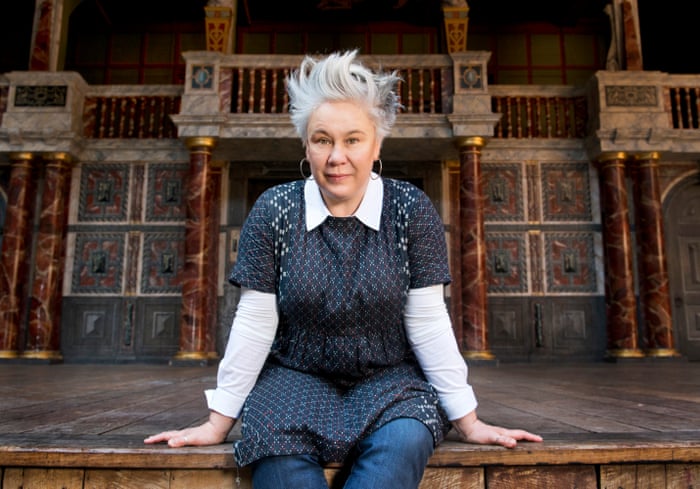
Emma Juliet Rice is an English actress, director and theatre professional. In January 2016 she was appointed to be the artistic director of Shakespeare’s Globe in London. Formerly known as the artistic director of the Kneehigh Theatre in Cornwall, England. She was born in 1967 (age 53 years), Chipping Norton and studied at Guildhall School of Music & Drama.

Emma Rice from a young age always knew she wanted to get involved in the performing arts industry thanks to her parents always taking her to the theatre at a young again. Throughout her life she had made numerous, ridiculous plays as she puts it all her life. She never thought she’d just become a director, her acting helped her to step up into it. For 10 years she worked with different directors and different methods in order to sharpen her skills and become well rounded in the big world of theatre and directing.

Started to perform at Kneehigh in 1994. Bill Mitchell and Mike Shepherd who were the Kneehigh Artistic directors eventually gave her the opportunity to direct, and she rose to prominence with ambitious performances that included productions in London’s West End as well as smaller theatres. Rice says that her long-running production of The Red Shoes represented a turning point in her career when she came into her own.

What are the main characteristics of Emma Rice’s work?

The main one would be how she creates a scenario where it can feel very personal. The best way to describe it, is how one may love something or is inspired by it so much that they have a need to be part of that world only in the way in which they see it. Draws ideas from her own experiences and brings to life a new perspective of an old classic, fairy tale or myth.

“There was no hiding behind a character, you had to be yourself, weaving a story, using your imagination, engaging a young audience. You can see the thread of that experience running through my work to this day.”

Emma Rice
https://www.thestage.co.uk/features/emma-rice-i-want-to-entertain-on-an-old-fashioned-level

“The Red Shoes,” the heroine must decide whether to wholeheartedly embrace the dance or live a more conventional life, just as Rice herself had to decide whether to live the life of an artist or a tamer existence.

As a result, Rice has always understood that harnessing the expertise and contributions of everyone in the room makes for a richer, more diverse, and more boldly textured theatre. An Emma Rice production values clowning as much as it sets store by fine acting; it is likely to meld popular music with classical sounds; and it constantly performs a high-wire act as it negotiates the tragic and the pantomimic, daft comedy and bruising truths. If much British theatre of the last 20 years has been knowing and ironic, Rice’s work has been distinctive for the way it wears its heart on its giddy sleeve. 

Lyn Gardner

How does she explain her creative process?

It’s all done instinctively; goes off her instincts and tells her stories at the time she thinks they’re needed the most. She is emotionally drawn to certain plays.

Rice brings old classics into a new era, loving the fact that an old story can feel new again just by changing the date, the political time, the place where it could be set and overall the need to change because that is the only certain thing that can be promised in life.

Rice’s gift has been her ability to take these age-old tales and turn them into stories about how we might live now. These involving: The Red Shoes,  The Wooden Frock (2003), Rapunzel (2006), The Little Matchgirl (2016), and Shakespeare’s most fairytale-like play Cymbeline.

Lyn Gardner
https://www.digitaltheatreplus.com/education/news/lyn-gardner-on-theatre-and-performance-emma-rice-directing-theatre%E2%80%A6-and-being

Looking for actors, she looks for someone she can play with, have fun with who she can relate too. Rice doesn’t class herself as a psychological or intellectual director, it all goes back to the imagination and creatively of it all. Getting to know the essence of the actor is the main goal, why are they here, what is driving them to perform, someone who can inspire Rice as well as knock her off her feet with all their tricks!

Rice brings old classics into a new era, loving the fact that an old story can feel new again just by changing the date, the political time, the place where it could be set and overall the need to change because that is the only certain thing that can be promised in life.

Why was her role as Artisitc Director of the Globe Theatre so controversial and short lived?

To put it simply she didn’t stay within their guidelines, she wanted to create her plays in a way that were different, unique to her style. Only two seasons as its artistic director before in April 2018 she walked away. The Globe prides itself on naturalistic effects, something she didn’t do. Her production of, “A Midsummer Night’s Dream,” incorporated an unconventional use of sound and lighting having a distant disco feel to it. I believe that’s a cool, fine way of portraying the otherwise consistently performed play. Sadly the board didn’t trust her artistic vision which in a way in wrong considering they knew what they were getting involved with when first hieing Emma.

“The heavens opened as I left,” she remembers, “and something washed away at that moment. I had such a sense of the narrative of my life…”

Emma Rice

Though she went on to open up her own theatre, “Wise Children,” and went on to carry on loving her career, leaving the Globe left a hole in her heart she’ll never be able to refill.

Not that I wanted what happened to happen – I didn’t. I will miss it until the day I die.”

Emma Rice

She loved the space, audience and excitement at the Globe.

The Observer’s theatre critic, Susannah Clapp, argues that Rice – lighting issues aside – understood the “deeper spirit of the Globe, the immediacy between audience and actors”, and describes her departure as “a puzzle and a scandal”. At her best, Rice’s productions were “exuberant, rambunctious, joyful”, says Clapp, adding: “I don’t know who the Globe thought they were appointing.”

https://www.theguardian.com/stage/2018/jul/01/emma-rice-controversial-shakespeares-globe-wise-children

Orpheus in the underworld Review

“The orchestra play well for Sian Edwards, but there’s not quite enough sparkle in the pit – nor, ultimately, on stage. This is Rice’s first opera, and I’d like to see her direct another, but only if she’s given material to work with that she doesn’t want to fight.”

https://www.theguardian.com/music/2019/oct/06/orpheus-in-the-underworld-coliseum-london-review-emma-rice-eno

Molory Towers Review

Rice’s rigour and passion are clear to see in her direction and the production as a whole, which is stuffed full of inventions and enchantments. Lez Brotherston’s mezzanine set is clean but complex, the back-screen used in thrilling ways (with a train scene reminiscent of Wise Children’s bus scene), the floorboards lifting up to conjure a swimming pool, a French class morphing in a few nifty moves into a Parisian restaurant with can-can dancers.

https://www.theguardian.com/stage/2019/jul/26/malory-towers-review-emma-rice-enid-blyton-passenger-shed-bristol

What do you think of her work? Does her aesthetic appeal to you? Would you like to work for her one day?

I can say for certain after watching a few of Rice’s pieces I would be frilled to work with her in the future! It would be such an adventure and unique experience! How she shows her creative talent on stage, is one that cannot necessarily be performed in the same way on TV and in films without having the same affect! Rice dances a different dance, one I would be honored to be apart of!

Cat on a Hot Tin Roof

My first attempt I think was actually I better one, it just wanted the whole thing and I didn’t do it in order yet it still made sense so I’m not complaining. I got my inspiration from the clip:

Tennessee Williams was the writer of “Cat on a Hot Tin Roof.”

Who is Tennessee Williams?

Tennessee Williams, original name Thomas Lanier Williams, was born March 26, 1911, Columbus, Miss U.S and died Feb. 25, 1983, New York City. Best known as an American dramatist whose plays reveal a world of human frustration in which sex and violence underlie an atmosphere of romantic gentility.

It make it more of a challenge for us, we had to perform with an american accent.

What is the play about?

A young couple struggling to get through a gathering at the husband’s family estate. Brick as he’s called doesn’t love his wife Maggie anymore and are being put on the spot by his father, Big Daddy who is dying on cancer and with his temper demands to know why they hadn’t given him grandchildren unlike Brick’s brother Gooper and his fertile wife Mae.

Strengths

I believe I did pull the accent off quite well considering I haven’t done many at all .

I decided not to move like how Maggie did in the clip because it felt more natural for me to stay seated.

Just the little gesture here and there in order to show she wants to look at her husband yet he clearly didn’t want to look at her and she doesn’t know where else to look.

Manged to make both make sense even though one of them wasn’t exactly in order.

Improvements

Should have been more confident performing it in front of the group. (However I did better on my own how I like it.)

I could have added in some movement to make it seem as if someone was right there but as i said before it made more sense to stay seated and the main thing I wanted to nail was the accent.

Maybe have a drink to show how Brick didn’t take it back like in the original clip.

Henrik Ibsen

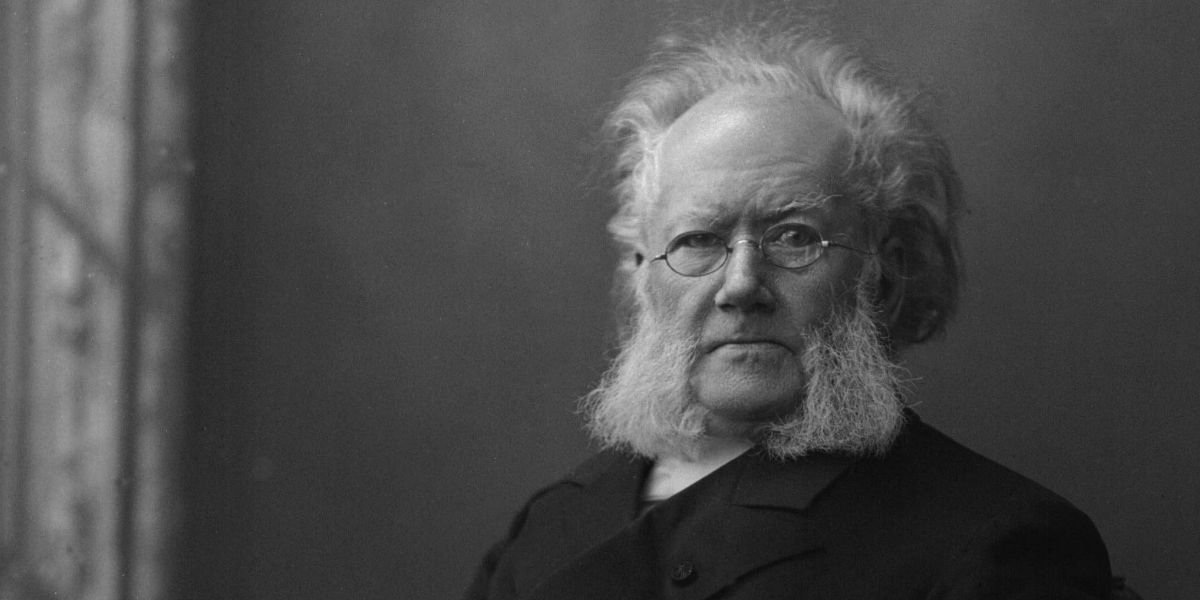
Henrik Ibsen was born on March 20, 1828, in Skien, Norway becoming the oldest of 5 children. At the age of 8 is family had finical problems and had to sell most of their belongings and moved to a rundown farm, where Henrik spent most of his time reading, painting and performing magic tricks.

Age 15 he got a job as an apprentice in an apothecary in Grimstad, he worked there for 6 years using what little free time he had to write poetry as well as paint.

In 1849, he wrote his first play Catilina, a drama written in verse modeled after one of his great influences, William Shakespeare.

He studied at the University of Christiania where he moved to in 1850 and became friends with many other artists and writers. Ole Schulerud a man he met there, paid for Henrik’s first play to be published, sadly it didn’t become one of much interest to the public.

In 1851 he was offered a job as a writer and manger of the Norwegian Theatre in Bergen. The job proved to be very stressful, he even had to go abroad in order to improve his abilities.

In 1857, Ibsen returned to Christiania to run another theater there. Once again it being an intense frustrating experience, even getting people complaining about how he should be ejected from the theatre, saying he did a poor, bad job of looking after it.

In 1862, Ibsen left Norway and soon settled down In Italy. 1865 was the year of Brand, a five-act tragedy about a clergyman whose feverish devotion to his faith costs him his family and ultimately his life; in was his first play that became famous in Scandinavia.

He went on to writing his most famous plays:

  • Peer Gynt (1864)
  • The Pillars of Society (1868)
  • A Doll’s House (1879)
  • Ghosts (1881)
  • An Enemy of the People
  • The Lady From the Sea (1888)
  • Hedda Gabler (1890)

In 1891, Ibsen returned to Norway as a literary hero.

The first play written after his return to Norway was The Master Builder. The next piece was When We Dead Awaken, written in 1899. Ibsen was also known for writing over 300 poems.

In 1900, Ibsen had a series of strokes that left him unable to write. He managed to live for several more years, but he was not fully present during much of this time. Ibsen died on May 23, 1906. His last words were “To the contrary!” in Norwegian. Considered a literary titan at the time of his passing, he received a state funeral from the Norwegian government.

Peer GyntA Doll’s House and Hedda Gabler are the most widely produced plays today out of all of his pieces of work.

I performed, Hedda Gabler with Mae in my class and we had a real good laugh with it. Ibsen’s plays aren’t ones I would touch upon nor perform because I feel they are stiff and mostly speech rather then action but I can only say that from watching a clip of Hedda Gabler. I did enjoy performing out duolouge however and will read some more of his work to get a better understanding of it.

Design a site like this with WordPress.com
Get started